
Bat Removal Laredo, TX
Laredo has the hottest summers on our Texas list and many tile and stucco roofs, which suit free-tailed bats. This page covers the local agencies, South Texas bat species, and how to time an exclusion around Laredo's long warm season.
Who handles bats and rabies in Laredo
Laredo Animal Care Services (LACS) handles animal bites and rabies-control cases inside the city. Since January 2025, KGNS reports, LACS has been a division of Laredo Public Health and no longer a stand-alone department, so animal control and public health now sit under the same health director. On the DSHS disease-reporting list, the City of Laredo Health Department is the contact for Webb County.
Texas law (25 TAC § 169.25) requires anyone who knows of a possible human exposure to rabies to report it to the local rabies control authority. For a bat in the house, DSHS advises confining it without touching it so it can be tested. Releasing it means a possible exposure can't be ruled out.
South Texas bats
Texas Tech's Mammals of Texas gives the bats most relevant to Laredo homes:
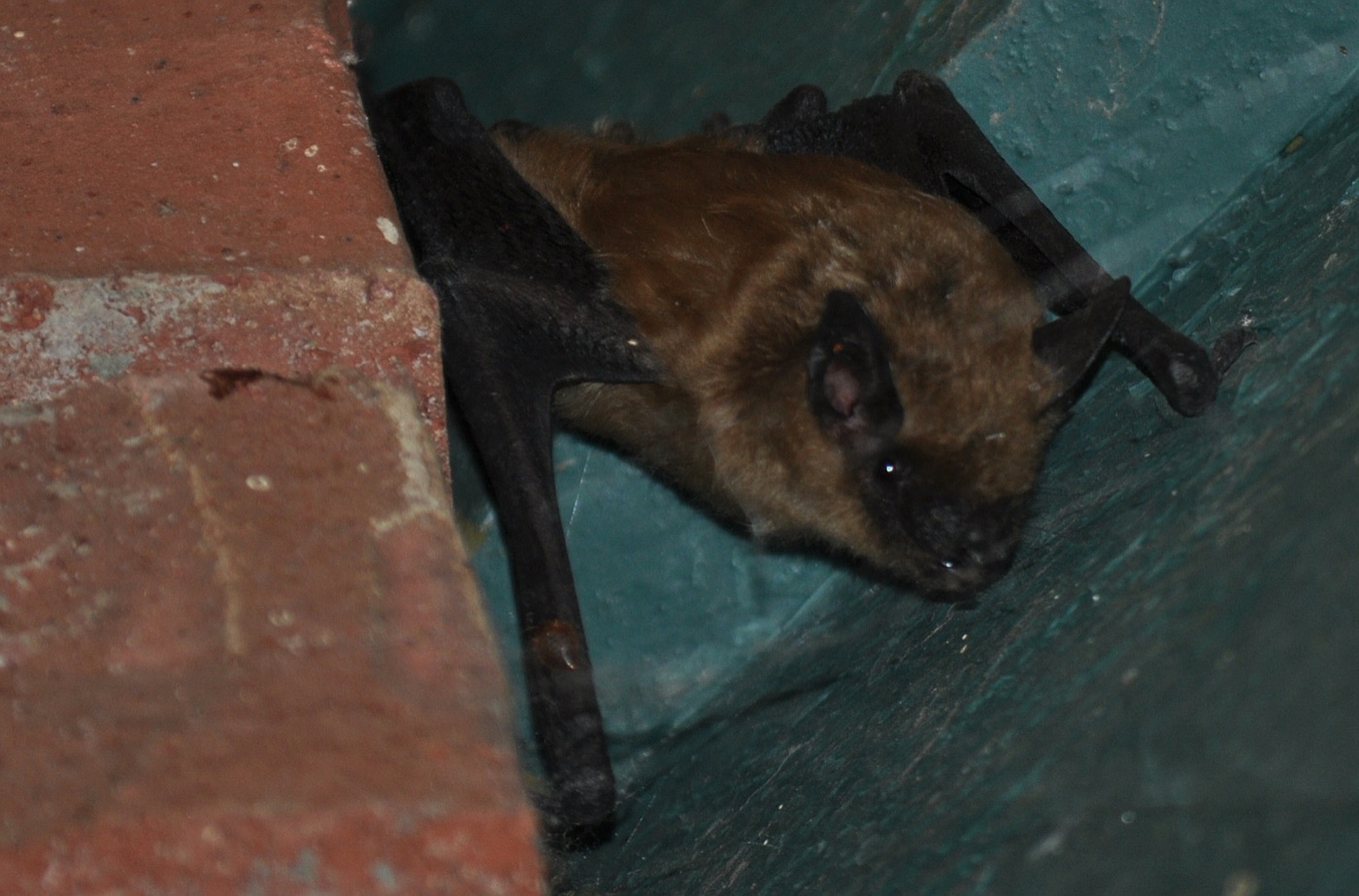
- Brazilian free-tailed bat: the most common bat in Texas. Texas Tech singles out Spanish-style clay tile roofs in South Texas as among the most vulnerable roofs to free-tailed bat colonies.
- Cave myotis: listed for South Texas. It roosts in caves but also in old buildings, carports, and bridges, and gives birth to one pup that flies at about three weeks.
- Pallid bat: found in the South Texas Plains. It uses attics and eaves in small colonies, and young are born from early May to mid-June.
Heat and timing
At Laredo International, the average July high is almost 100°F and August averages about 101°F. Average lows stay at 50°F or warmer from February through November. Bats are active almost all year, but attics get extremely hot in summer, so bats often move toward cooler wall voids, lower soffits, and the shaded side of a roof. TPWD discourages exclusion from May 1 to August 15. Laredo's long warm fall makes September through November a dependable window, and the mild weather also allows February through April.
Laredo housing and climate snapshot
- Housing units: 87,698 (median year built 1997)
- Built before 1980: 26%; built 2010 or later: 21%
- Single-family detached: 66%; buildings with 10+ units: 11%
- Renter-occupied homes: 35%
- Average January low: 46°F; average August high: 101°F
- Months with an average low of 50°F or warmer: Feb–Nov
Housing figures: U.S. Census Bureau, ACS 2024 1-year estimates (tables B25024, B25034, B25035, B25003) via Census Reporter. Climate: NOAA 1991–2020 normals, Laredo Intl Ap station.
Two-thirds of Laredo homes are detached houses, and about 8% are mobile homes, a much larger share than in the other big Texas cities. Bats in mobile homes usually get in through skirting gaps, the belly wrap, and gaps where an added porch roof meets the main roof. On tile roofs, the open ends of the tiles at the eaves need bird stops or closure strips. We seal every gap except the main exit, add a one-way device there, and close it once the bats are out.
Common questions
Who handles bat bites in Laredo?
Laredo Animal Care Services, which has been a division of Laredo Public Health since January 2025, handles bites and rabies cases in the city. Get medical care, and keep the bat contained if you can do it safely.
Why do Laredo tile roofs get bats?
Texas Tech's Mammals of Texas identifies Spanish-style clay tile roofs in South Texas as among the most vulnerable to free-tailed bat colonies. The open tile channels give bats sheltered gaps.
Can bats live in mobile homes in Laredo?
Yes. They usually get in through skirting, the underside belly wrap, and gaps where added porch roofs meet the home. About 8% of Laredo housing is mobile homes.
When can bats be excluded in Laredo?
After TPWD's May 1 – August 15 pup-season guidance ends. Laredo's warm nights usually keep the window open from September through November, and from February through April.
What bats live around Laredo?
Brazilian free-tailed bats are the most common. Texas Tech also lists the cave myotis and pallid bat in South Texas.
Nearby city guides
Sources
- KGNS: Laredo Animal Care Services moves under Laredo Public Health (Jan 30, 2025)
- City of Laredo: Animal Care Services
- Texas DSHS: Webb County disease reporting contacts
- Mammals of Texas (TTU NSRL): Brazilian free-tailed bat
- Mammals of Texas (TTU NSRL): cave myotis
- Mammals of Texas (TTU NSRL): pallid bat
- TPWD Outdoor Annual: nongame and other species (bats)
- 25 Tex. Admin. Code § 169.25: reports of human exposure to rabies
- Texas DSHS: bat exposure scenarios and capture tips
- Census Reporter: Laredo ACS 2024 profile
- NOAA NCEI 1991–2020 monthly normals (Laredo Intl Ap)
Other Texas cities we serve
We serve all of Texas. Here are nearby service areas.
Other wildlife removal services we offer here
Laredo bat removal, done right.
Call for a phone consultation. Written warranty. Licensed by Texas Parks & Wildlife.