How Wildlife Gets Into Your Home in Texas: The Common Entry Points
Animals do not create the openings they use. They find the ones your house already has. Here is where Texas wildlife actually gets in, and what a permanent fix looks like.
Texas homes carry wildlife pressure that homeowners in cooler climates rarely face. Longer activity seasons, year-round species like the Mexican free-tailed bat and roof rat, and warm attic spaces hospitable twelve months a year mean that by the time a homeowner in Austin or San Antonio hears something in the ceiling, the animal has usually been using that entry point for weeks.
This post covers where animals get in, how little space each species needs, and what the right repair looks like. The answer is almost always exclusion: sealing entry points so animals cannot return. Exclusion is more permanent, more humane, and the only approach that addresses the source of the problem rather than the symptom.
The Roofline: Where Most Texas Wildlife Problems Start
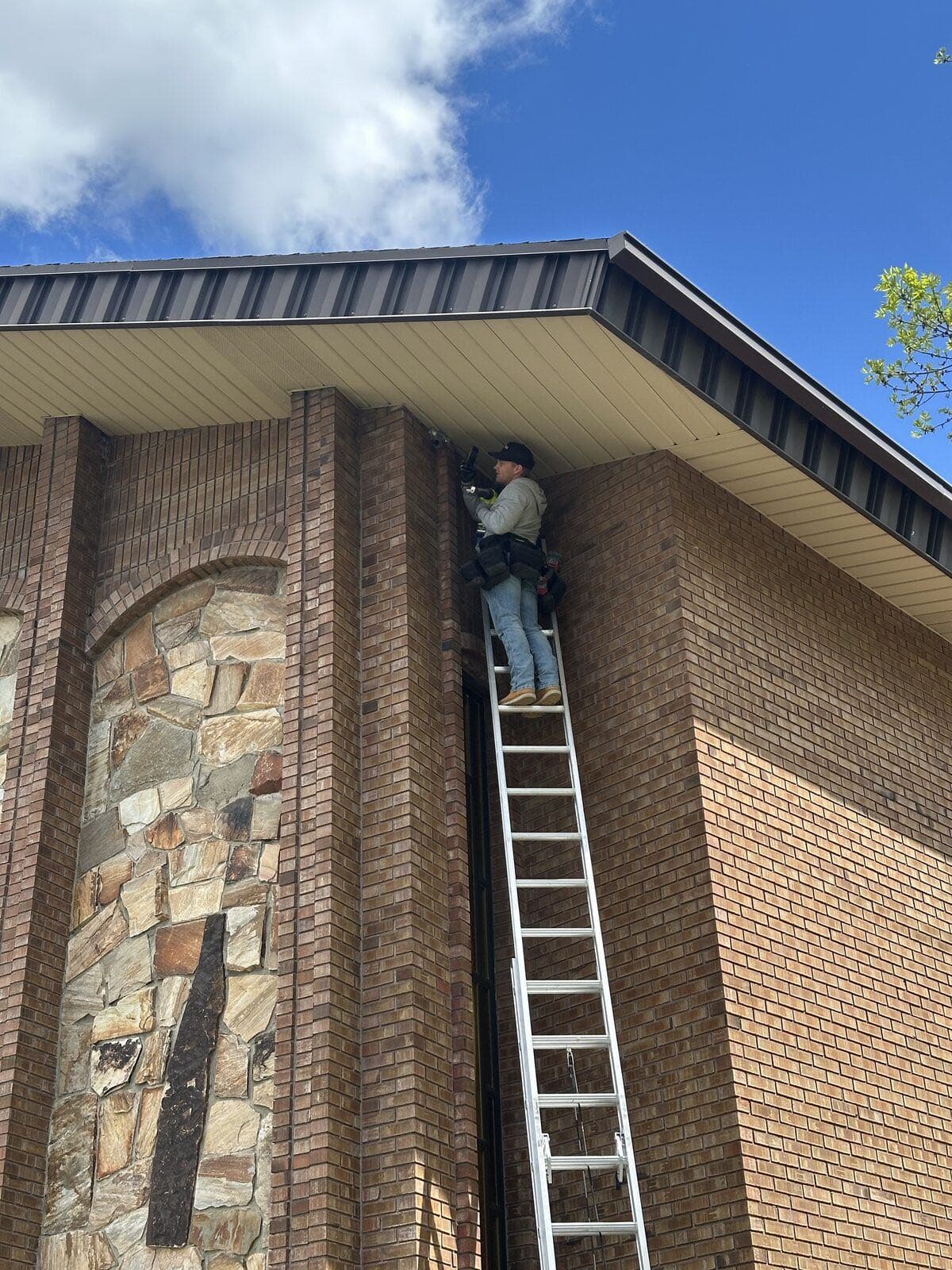
The roofline is the single most common entry zone for wildlife in Texas homes. Fascia boards, soffits, and the joints between roof planes sit high enough that most homeowners never inspect them, yet heat cycles cause wood to expand and contract every year, opening small gaps that animals learn to exploit.
Fascia is the flat board at the lower edge of your roof; soffit is the horizontal underside of the overhang. Together they form a continuous seam around the entire perimeter of the house. A gap most homeowners would walk right past is enough for a fox squirrel to enter, and a raccoon is strong enough to pull back rotted soffit material and create an opening where none existed. In San Antonio and Houston, where summer heat and humidity accelerate wood deterioration, a small crack can become a fist-size hole in a single season.
When inspecting the roofline, pay closest attention to:
- Corners where fascia meets at angles, especially above garage doors and at dormers
- Any place where two roof planes come together (the ridge) or where an addition meets the original structure
- Low spots on older homes where water has pooled and softened the wood
- Gaps at eave returns where the soffit wraps around the corner of the house
Gable Vents: Texas Attics Have an Extra Vulnerability Here
Gable vents are the screened openings on the triangular end walls of your attic. In Texas, where attic temperatures climb brutally high on summer afternoons, these vents are often larger than in northern climates. Larger openings mean more entry opportunity for animals.
Factory-installed mesh is too coarse to stop a flying squirrel. UV exposure degrades plastic mesh within a few years in the Texas sun; metal screens corrode in the Houston metro and coastal areas. Once brittle or corroded, repeated animal pressure breaks through quickly. The right replacement is 1/4-inch hardware cloth, a rigid galvanized mesh that holds its shape. If you can push the screen inward from inside the attic with moderate hand pressure, it needs to be replaced.
Dryer Vents and Bathroom Exhausts Are Active Entry Points
Dryer vents, bathroom exhaust vents, and kitchen range hoods all terminate on the exterior wall or roof. Each one exhausts warm air, which from outside reads as a sheltered cavity, exactly what a bird or small mammal looks for when nesting season arrives.
Birds are the most frequent occupant of dryer vents in Texas. Non-native European starlings and house sparrows will pack nesting material into a dryer duct until airflow slows to almost nothing. A clogged dryer vent extends drying times, raises energy costs, and creates a fire risk. According to the U.S. Fire Administration, dryer vent fires account for roughly 2,900 house fires per year nationally, and blocked vents are a leading cause.
Native birds nesting in vents are a different legal situation. Many songbirds found across Texas are protected under the Migratory Bird Treaty Act, and an active nest with eggs or live young generally cannot be removed without a federal permit. According to the Texas Parks and Wildlife Department (tpwd.texas.gov), the protected status of the specific species in your vent determines what can legally be done and when. A licensed technician will identify the bird before recommending any action.
The correct fix for dryer and exhaust vents is a pest-proof cap with a spring-loaded or flapper damper that opens under airflow pressure and closes when the appliance shuts off. Rigid mesh should never go over a dryer vent because lint accumulates in it quickly, recreating the same blockage within months.
Chimneys: An Uncapped Flue Looks Like a Hollow Tree
Raccoons are instinctive cavity nesters. A masonry chimney flue is dark, stable, and sheltered from rain. To a pregnant raccoon in Round Rock or Plano it reads exactly like a hollow tree. Raccoon mothers raising young inside chimney flues are a classic spring call for wildlife companies across Texas.
The right fix is a chimney cap with a welded wire cage around the sides. The cap keeps rain out, which protects the masonry, and the cage blocks entry. A cap without a cage, or one with corroded welds, is not adequate. Check yours from the ground with binoculars every couple of years.
Chimney swifts are a different situation. These migratory birds return to Texas each spring and summer and are federally protected under the Migratory Bird Treaty Act. According to the Texas Parks and Wildlife Department (tpwd.texas.gov), active swift nests cannot be disturbed or removed. Work with a licensed professional who knows the legal timeline before any capping is attempted.
For chimneys with an active raccoon family, removing adults before young are mobile can create additional problems and may conflict with Texas wildlife regulations. Young raccoons become self-sufficient within eight to ten weeks of birth. A licensed technician will determine whether a one-way device or a waiting period is the right call.
Foundation Weep Holes, Crawlspace Vents, and Below-Grade Entry Points
Texas brick construction hides an entry point most homeowners never think about: weep holes. These small openings at the base of brick veneer walls let moisture escape from the wall cavity. The narrow vertical slots are sized almost perfectly for a mouse or a young roof rat.
Roof rats are widespread in Houston, San Antonio, and Austin. A row of weep holes along a brick home's base is a standing rodent invitation. Copper mesh or stainless steel weep hole covers let moisture out and keep rodents out.
Crawlspace vents are a second low-grade vulnerability. Vent covers on homes built before the 1990s are often thin stamped metal or plastic that warps and corrodes over time. A skunk needs only a modest gap at grade to get under a structure. Armadillos and opossums will dig under a foundation where soil has settled away from the sill plate. Exclusion here means hardware cloth buried well below grade and angled outward to stop digging. Spray foam alone is not enough: rodents chew through it.
How Little Space Texas Wildlife Actually Needs
The gaps animals use are almost always smaller than homeowners expect. Here is a practical reference for the species most commonly found in Texas homes:
- Mouse: an opening about the size of a pencil eraser
- Roof rat or Norway rat: not much more than a mouse needs
- Flying squirrel: a gap you would struggle to spot from the ground
- Fox squirrel or gray squirrel: an opening about the size of a golf ball
- Mexican free-tailed bat: the narrowest of all, a seam most contractors would dismiss as too small to matter
- Opossum: a fist-size opening
- Raccoon: a fist-size gap it will tear larger if the material is soft or rotted
Bats require a specific note. Texas has more bat species than any other U.S. state, and the Mexican free-tailed bat forms large maternity colonies in attics across Austin, San Antonio, and Dallas. According to the Texas Parks and Wildlife Department (tpwd.texas.gov), excluding bats from buildings is discouraged from May 1 through August 15, when pups cannot yet fly. Sealing during that window traps flightless young inside. A licensed professional will identify the species and schedule work within the recommended window.
What About Venomous Snakes Near Entry Points?
Texas is home to four venomous snake groups: rattlesnakes (including the western diamondback), copperheads, cottonmouths, and coral snakes. Snakes are not entering homes to nest the way mammals do, but they follow the same gaps, typically chasing a rodent food source through a crawlspace vent gap, a door threshold, or a damaged weather seal.
The best snake prevention is rodent exclusion. Seal the gaps rodents use and you remove the reason snakes are near your foundation. If you find a venomous snake inside a structure, do not attempt to handle it yourself. Our technicians handle venomous snake removal safely and can trace the entry point.
Should You Seal First or Confirm the Animal Is Gone First?
Confirming the animal is gone before sealing is not optional, it is the whole job. Sealing an active entry point traps the animal inside. A raccoon or squirrel trapped in an attic will tear through drywall, insulation, and wiring trying to escape. Young animals that cannot escape die inside the wall cavity, and in a Texas summer, the odor from that can persist for months.
A correct exclusion follows three steps: inspect the interior and exterior to confirm active occupation; install a one-way device at the primary entry so animals can exit to forage but not re-enter; and once the space is confirmed empty over several monitoring days, remove the device and permanently seal every vulnerable point identified in the initial walk-through. Skipping the confirmation step is what leads to callbacks and remediation costs.
Wildlife finds entry points that have existed for years before any animal used them. The animal did not create the vulnerability. It found it. Every gap described here is fixable, and exclusion work done correctly is a one-time repair, not a recurring patch.
If you have heard noises in the ceiling, found droppings, spotted damaged soffit or vent covers, or had a close call with a snake near your foundation, a professional inspection is the right next step.
Frequently asked questions
How small a gap does a mouse need to get into a Texas home?
A mouse can fit through a gap about the size of a pencil eraser, and a rat does not need much more. In Texas, foundation weep holes built into brick veneer are a particularly common rodent entry point because they are almost exactly that size and positioned right at ground level. Steel wool is a short-term deterrent. Permanent exclusion requires rigid materials: metal flashing, hardware cloth, or exterior-rated caulk, depending on the location.
Can I exclude bats from my Texas home on my own?
Timing matters more than the method. According to the Texas Parks and Wildlife Department (tpwd.texas.gov), excluding bats from buildings is discouraged from May 1 through August 15. During that window, Mexican free-tailed bat pups and other young bats are present but cannot yet fly. Sealing entry points during that period traps flightless pups inside, which is both inhumane and counterproductive. A licensed wildlife professional knows the recommended exclusion window and can confirm which species are present before any work begins.
What is a one-way exclusion door and how does it work?
A one-way exclusion device is a tube or flap installed over the primary entry point. Animals push through it to exit when they leave to forage but cannot re-enter from outside. Once we confirm the space is empty, the device is removed and the opening is permanently sealed along with every other vulnerable spot found during the inspection. Nothing is trapped or harmed. This is the standard humane approach for squirrels, raccoons, and bats alike.
How much does wildlife exclusion cost in Texas?
Cost depends on the species, the number of entry points, the size of the structure, and how accessible the problem areas are. Industry ranges generally fall between a few hundred dollars for a single entry point repair and several thousand dollars for a full-perimeter seal on a larger home. The only accurate figure comes from an on-site look at your specific property.
Related reading
Wildlife in your home? Contact us today.
Call for a phone consultation.