
What Is That Scratching in My Attic? A Texas Homeowner's Guide to Identifying the Animal
The type of noise, the hour you hear it, and the time of year narrow the suspect list fast. Here is how to read the clues coming through your ceiling before you call anyone.
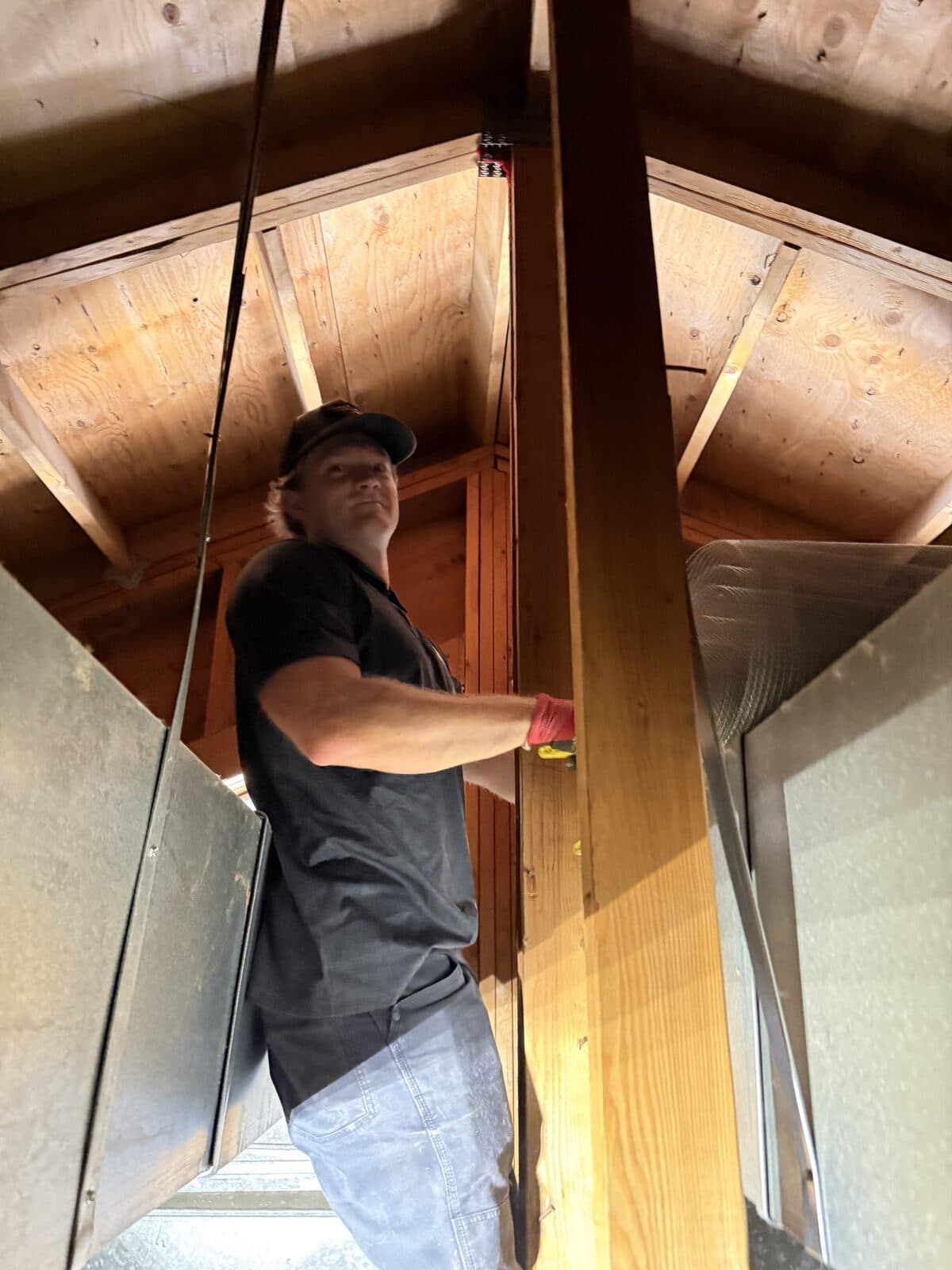
At 2 in the morning you are awake in your Austin or San Antonio home, staring at the ceiling, listening. Something up there is scratching. It pauses. Scratches again. The sound moves a foot or two, then stops.
Texas attics are some of the busiest real estate in residential wildlife removal. Mild winters, hot summers that push animals into cooler spaces, and dense tree canopy across neighborhoods from Houston to Fort Worth to Round Rock give wildlife constant pressure and constant opportunity. A gap the size of a quarter is all it takes. By the time a homeowner calls, the animal has usually been in the attic for weeks, not days.
The sound you are hearing right now is diagnostic. The type of noise, the hour you hear it, and the time of year narrow the list of suspects quickly. Here is how to read those clues before you call.
Scratching, Scurrying, and Thumping: The Sounds Are Not Interchangeable
Each animal moves differently, and the noise it makes reflects those movement patterns. Identifying the category of sound is the fastest first step.
Scratching that is slow and deliberate, stopping and starting in the same spot, usually means claws working against wood or insulation. Squirrels scratch when they gnaw on structural members or store food. A sustained scratching that pauses, then resumes, is more likely an animal chewing than one simply walking. This sound is common near the eaves and along the roof decking.
Scurrying is fast, light, and tends to travel in a consistent path. This is the signature sound of smaller rodents. Norway rats and roof rats both appear regularly in Texas homes, especially in Houston and Dallas where older construction gives them more entry points. A mouse can pass through a gap roughly the size of a dime, and a roof rat does not need much more. Their footsteps are quick and follow the same route repeatedly, tracing a path along a joist or wall plate. If the scurrying is loud enough to wake you from sleep, it is more likely a rat than a mouse.
Thumping is heavier and intermittent, like something dropping its weight from one surface to another. A raccoon landing after stepping off a beam produces a muffled thud that stops you mid-sentence. Opossums move more slowly, with a heavy dragging quality. In Texas, raccoons are among the most common causes of this sound, particularly in wooded suburban areas around Austin, Plano, and Frisco where mature trees give them direct roof access.
Fluttering or faint chattering near dusk or just before dawn is its own category entirely. Bats do not scurry or thump. They rustle. Texas is home to more bat species than any other state in the country, and Mexican free-tailed bats in particular form large maternity colonies in residential attics across Central Texas. A colony produces a soft, high-frequency chattering, and if young pups are present, a faint squeaking. If the noise appears only at dusk and again near dawn, and sounds like rustling fabric rather than footsteps, bats move to the top of the list.
What Time of Day Are You Hearing It?
The hour of activity is one of the most reliable ways to narrow the possibilities. Animals fall into two broad groups: diurnal, meaning active during daylight, and nocturnal, meaning active at night. Knowing which group you are dealing with cuts the suspect list in half immediately.
Daytime noise, from sunrise through mid-afternoon, points almost immediately to squirrels. Fox squirrels and eastern gray squirrels are both common throughout Texas, and they are among the very few attic-dwelling wildlife species that are active in daylight. They leave at first light to forage and return through the morning and early afternoon. If the noise tracks with the sun and goes quiet at night, squirrels are the first species to rule in or out.
Nocturnal noise, particularly between 10 p.m. and 4 a.m., points to rats, raccoons, opossums, and bats. Each has a slightly different activity window. Roof rats and Norway rats tend to peak in the two hours after midnight. Raccoons are most active between midnight and 3 a.m. Bats are active during two brief transition windows only: the hour after dusk and the hour before dawn. If you hear noise only at those transition times and it sounds more like fluttering than footsteps, bats should move up your list.
Noise at dawn and dusk, those transition hours when light is shifting, can indicate animals coming and going. This is common with squirrels leaving at first light and returning before dark. It can also mean a nursing female making brief trips to feed while leaving young behind in the attic.
Season Shapes What Animal You Are Likely to Find
Wildlife behavior is seasonal, and Texas seasons drive animal behavior in specific, predictable ways. The mild winters across South and Central Texas mean animals that would den heavily in colder states remain active here longer, extending the window during which they look for shelter.
Late winter and early spring are the most common time for squirrels and raccoons to enter attics. Pregnant females actively search for safe denning sites starting in February, and if an animal enters your attic during this window, the presence of young is a real possibility. A technician who removes a nursing mother without locating and safely accounting for her offspring creates a second, separate problem: pups too young to survive on their own, dying inside the structure.
Spring and summer are the peak activity period for bats in Texas. According to the Texas Parks and Wildlife Department, bat maternity colonies in Texas form in spring and remain active into fall, and TPWD discourages excluding bats from buildings from May 1 through August 15 because young bats that cannot yet fly would be sealed inside and die. Exclusion means sealing the entry points so animals cannot get back in. Performing that work during the maternity window leaves flightless pups trapped inside, and a dead colony in the structure becomes a remediation problem on top of the original one. Check TPWD's current guidance at tpwd.texas.gov before any bat exclusion work begins.
Fall is when mice and rats move indoors across Texas as nights cool. House mice multiply remarkably fast under favorable conditions. Roof rats, which are common in Houston, Austin, and Dallas, are strong climbers and frequently enter attics through gaps along the roofline. By the time you hear them overhead, the entry point has likely been open for weeks.
Winter noise in Texas is frequently raccoons or opossums seeking warmth during cold fronts. Neither fully hibernates. A homeowner who hears noise for two weeks, then silence during a cold snap, then noise again when it warms up is often dealing with a raccoon following temperature patterns.
Texas-Specific Species That Change the Calculation
Texas wildlife rules and biology introduce a few species that require specific attention. General wildlife removal advice from other regions does not always apply here.
The Mexican free-tailed bat deserves its own mention. Texas hosts one of the largest urban bat populations in the world, concentrated in Austin and San Antonio but present across much of the state. According to the Texas Parks and Wildlife Department, these bats are protected under state law, and their maternity colonies, which can grow large in a residential attic, should not be disturbed during the May 1 through August 15 maternity season. A chirping, rustling sound in your attic combined with dark staining around a small gap in the eaves is a strong signal. Do not seal anything until a technician has confirmed the species and the exclusion window is open. For more information, see our post on Mexican free-tailed bats in Texas.
Texas also has four venomous snake groups that occasionally enter structures: rattlesnakes (including the western diamondback), copperheads, cottonmouths, and coral snakes. Snakes in an attic are rare but not unheard of, particularly in rural areas or homes with significant rodent activity that draws them in. A soft, slow dragging sound with no other animal cues, especially in a crawl space or along the lower structure of a home, warrants a professional assessment before any hands-on inspection. For a full rundown, see our guide to venomous snakes of Texas.
Physical Evidence That Confirms What the Sound Suggests
Sound is strong, but physical evidence inside and outside the home confirms it. A technician inspects all of this during a site visit. You can safely check several points yourself from the ground.
Entry points on the exterior: Squirrels typically use gaps at roof-soffit intersections, damaged fascia boards, and open vents. Raccoons need a larger opening and will enlarge an existing gap to get one. Rats, mice, and bats slip through openings most homeowners would dismiss as too small to matter. In Texas, aging wood-frame homes in older Houston and Dallas neighborhoods often have multiple soft points simultaneously.
Droppings: Mouse droppings are roughly the size of a grain of rice, dark, and tapered at both ends. Rat droppings are larger, blunt-ended, and capsule-shaped. Raccoon droppings are substantial and may contain berry seeds or insect parts. Bat droppings, called guano, crumble to a fine powder when dry and accumulate in a cone-shaped pile below the roost point. Guano can carry Histoplasma capsulatum, a fungus that causes a respiratory illness called histoplasmosis. Do not disturb bat guano without respiratory protection.
Nesting material and chew marks: Squirrels build compact nests from leaves, shredded insulation, and fibrous material. Raccoons pile insulation and soft debris into a loose mound. Mice build small nests tucked into corners or inside stored boxes. The presence of nesting material tells you the animal has established a home, not passed through. Rodent gnaw marks on wiring insulation are a direct fire hazard.
What Does Waiting Actually Cost?
Most homeowners wait weeks between first hearing a noise and calling a wildlife company. In Texas, where animals stay active longer due to mild winters, that window can stretch further.
Three damage categories grow during that wait. The first is structural: gnawed joists, compromised insulation, damaged roof decking. The second is hazardous: contaminated insulation, urine that saturates wood and creates permanent odor, and for rodents, chewed electrical wiring. The third is infestation: parasites including fleas, ticks, and mites arrive with the animal and remain in the space after it is gone if the attic is not cleaned and treated.
Exclusion work completed before a colony grows or a litter is born costs significantly less than remediation done after months of occupancy. General industry ranges for straightforward exclusion work start in the low hundreds of dollars. Full attic remediation following a large colony can run several thousand. An on-site inspection is the only way to know where your situation sits. You can also read more about what to expect on cost in our post on how much wildlife removal costs in Texas.
The animal in your attic is not trying to cause damage. It is doing exactly what animals do: finding a dry, sheltered space to live and raise young. The problem is not the animal's existence. The problem is where it chose to exist. A licensed technician's job is to give it a clear one-way exit, seal every entry point so it cannot return, and restore the space to a safe condition. No poisons. No inhumane traps. A door out and no door back in.
Frequently asked questions
Is it dangerous to let an animal stay in my attic in Texas?
Yes, over time. Most wildlife will chew wiring, shred insulation, and contaminate the space with droppings and urine. Structural damage and fire risk increase the longer an animal stays. Some species also carry parasites. A licensed technician can assess the risk level during an on-site inspection.
Can I remove the animal myself in Texas?
It depends on the species, and the rules differ enough that checking the Texas Parks and Wildlife Department's current guidance at tpwd.texas.gov first is worth it. Bats are a firm example: according to TPWD, bats are protected under state law, and excluding them from buildings is discouraged from May 1 through August 15, when flightless pups are in the roost. Sealing during that window traps the young inside and leaves you with a dead colony in the structure. Always confirm current rules with TPWD before attempting any removal.
How much does wildlife removal cost in Texas?
Costs vary by species, the number of entry points, and how long the animal has been present. General industry ranges run from a few hundred dollars for a simple rodent exclusion to several thousand for a full bat colony exclusion with attic remediation. The only way to get an accurate number for your home is an on-site inspection.
What if the scratching stops on its own?
Silence does not mean the animal left. Many species go quiet during the day, during a cold front, or when a nursing mother briefly leaves to feed. The entry point is still open. Young animals may also go quiet as they mature but remain in the space. If you heard noise, have the exterior inspected.
Related reading
Wildlife in your home? Contact us today.
Call for a phone consultation.