
How to Keep Bats Out of Your House in Texas
Keeping bats out of a Texas home comes down to sealing the right gaps at the right time of year. Here is what works, what TPWD guidance allows, and why the calendar matters as much as the caulk gun.
Texas Hosts More Bat Species Than Any Other U.S. State, and Several of Them Are Living in Houses Right Now
The Texas Parks and Wildlife Department recognizes 32 bat species in the state. Most of them prefer caves, cliffs, and trees. Some have developed a strong preference for attics, wall voids, and the gap behind your fascia board. If you live in Austin, San Antonio, Houston, or anywhere across the Texas Hill Country, there is a reasonable chance a colony has already investigated your roofline as a potential summer nursery.
This post covers what actually works to get bats out and keep them out, why the calendar matters as much as the method, and what Texas law and TPWD guidance require before anyone touches a bat roost.
Why Texas Homes Draw Bat Colonies
Bats in Texas are not interested in your food, your pets, or your living space. Female bats form maternity colonies in spring to give birth and raise their young, and they want exactly what your attic offers: warmth, darkness, protection from weather, and stability. An older home in Dallas or Fort Worth with wood fascia that has dried and pulled away from the soffit, or a house in Round Rock with a degraded ridge vent screen, looks like an ideal nursery to a scout bat in March.
The Mexican free-tailed bat is the species most commonly found roosting in Texas homes and structures, though cave myotis and big brown bats also turn up in attic spaces with some regularity. According to the Texas Parks and Wildlife Department, free-tailed bats form some of the largest bat colonies in the world right here in Texas. Bracken Cave outside San Antonio holds an estimated 15 to 20 million bats. That gives you a sense of how this species thinks about crowded spaces: they are comfortable in them.
Colonies return to the same roost year after year. A group that used your attic last summer will attempt to come back this spring. That is the key detail most homeowners miss. Waiting and hoping they move on rarely works, because the bats already consider that space home.
Exclusion: What It Means and Why It Is the Standard Method in Texas
Exclusion means sealing entry points so bats cannot get back in after they leave to forage. It does not mean trapping, poisoning, or killing. Those approaches conflict with Texas wildlife protections and are counterproductive anyway. Bats clear an enormous volume of night-flying insects, and Texas cotton and corn growers benefit from the natural pest suppression that free-tailed bat colonies provide at a scale no spray program matches.
Proper exclusion follows three stages. First, a technician inspects the entire exterior to locate every gap, crack, and penetration the bats are using or could use. Second, one-way exclusion devices, small tubes or netting panels that let bats exit but block their return, go in at the active entry points. Third, after the colony has left, typically within a few days to two weeks, the devices come out and every opening gets permanently sealed with materials rated for exterior use: caulk, hardware cloth, metal flashing, or foam backer rod, depending on location and gap size.
When exclusion is done correctly, it is a permanent solution. When it is rushed or done at the wrong time of year, it traps animals inside, which creates an odor and structural problem far more expensive than the original exclusion.
Is There a Window for Bat Exclusion in Texas?
Yes, and most homeowners do not know this until they have already called someone and been told to wait. According to the Texas Parks and Wildlife Department, excluding bats from buildings is discouraged from May 1 through August 15, when young bats are unable to fly and may be entrapped. During this period, pups are too young to follow the adults out. Sealing entry points while they are inside leaves them with no way out, causes them to die within the walls, and produces a decomposition odor and secondary contamination problem that can take weeks and significant expense to fully address.
The two best windows for exclusion work in Texas are late summer into fall, after pups have fledged and the colony is still active, and late winter to early spring, before females return to establish the maternity roost. If you are reading this in June or July and bats are actively using your attic, the right move is to document the entry points, confirm the colony size, and schedule the exclusion work for after August 15 rather than attempting anything now.
Bats in Texas have specific legal protections. According to the Texas Parks and Wildlife Department, bats may not be hunted, killed, possessed, purchased, or sold. They may be moved, trapped, or killed if found inside or on a building occupied by people, but that exception covers individual bats, not colony exclusion during the maternity season. If a company quotes you bat removal without discussing the maternity season, that is a warning sign worth acting on before any work begins.
How Do You Know Bats Are in Your House?
Most Texas homeowners find out one of four ways. They watch bats stream out of a gap in the roofline at dusk. They find guano collecting in the attic or along an exterior wall. They notice a heavy ammonia smell in the attic or upper rooms that does not have another explanation. Or they find a single bat inside the living area that made its way in through an interior gap.
Bat guano looks somewhat like mouse droppings but crumbles to a fine powder when dry and often contains the shiny fragments of insect wings and exoskeletons. It accumulates directly below the roost. A heavy deposit near a particular vent or wall section usually points directly to where the colony is entering. In a home with an established colony, guano can reach several inches of depth and may require professional cleanup due to the risk of histoplasmosis, a respiratory illness caused by a fungal spore that can grow in bat guano.
If a single bat ends up inside your living space, do not release it immediately if there is any possibility it came into contact with a sleeping person or a child. Bat bites can be small enough to go unnoticed, according to the CDC. Capture the bat carefully without direct skin contact, and contact your local health department for guidance on whether rabies testing is warranted.
Prevention: Sealing Your Home Before a Colony Establishes
The least expensive bat job is the one you do before the bats arrive. A home that has never hosted a colony can be proofed against one with a targeted inspection and sealing of the most common entry points. Here is what that work typically covers.
- Fascia and soffit gaps. Where wood meets wood along the roofline is the most common bat entry point in Texas residential structures. A gap most homeowners would dismiss as too small to matter is enough for a free-tailed bat to squeeze through. Boards that have dried, warped, or pulled apart over time are the most common culprits.
- Ridge vents and gable vents. Attic vents are necessary, but they need to be screened with fine hardware cloth. Standard window screen is too flimsy to hold up against persistent use and Texas summer heat.
- Chimney chase gaps. The joint between the chimney and its surrounding flashing or chase framing tends to open up as caulk shrinks and cracks over time. This is one of the most overlooked bat entry points on Texas homes.
- Pipe and conduit penetrations. Any place a pipe or electrical conduit passes through an exterior wall is a potential gap. Exterior-rated caulk or foam should seal these completely.
- Roof-to-wall transitions and dormer joints. Complex rooflines common in Plano, Frisco, and other newer Texas suburbs tend to have more potential entry points at the intersections between different roof planes, especially as the structure settles in its first several years.
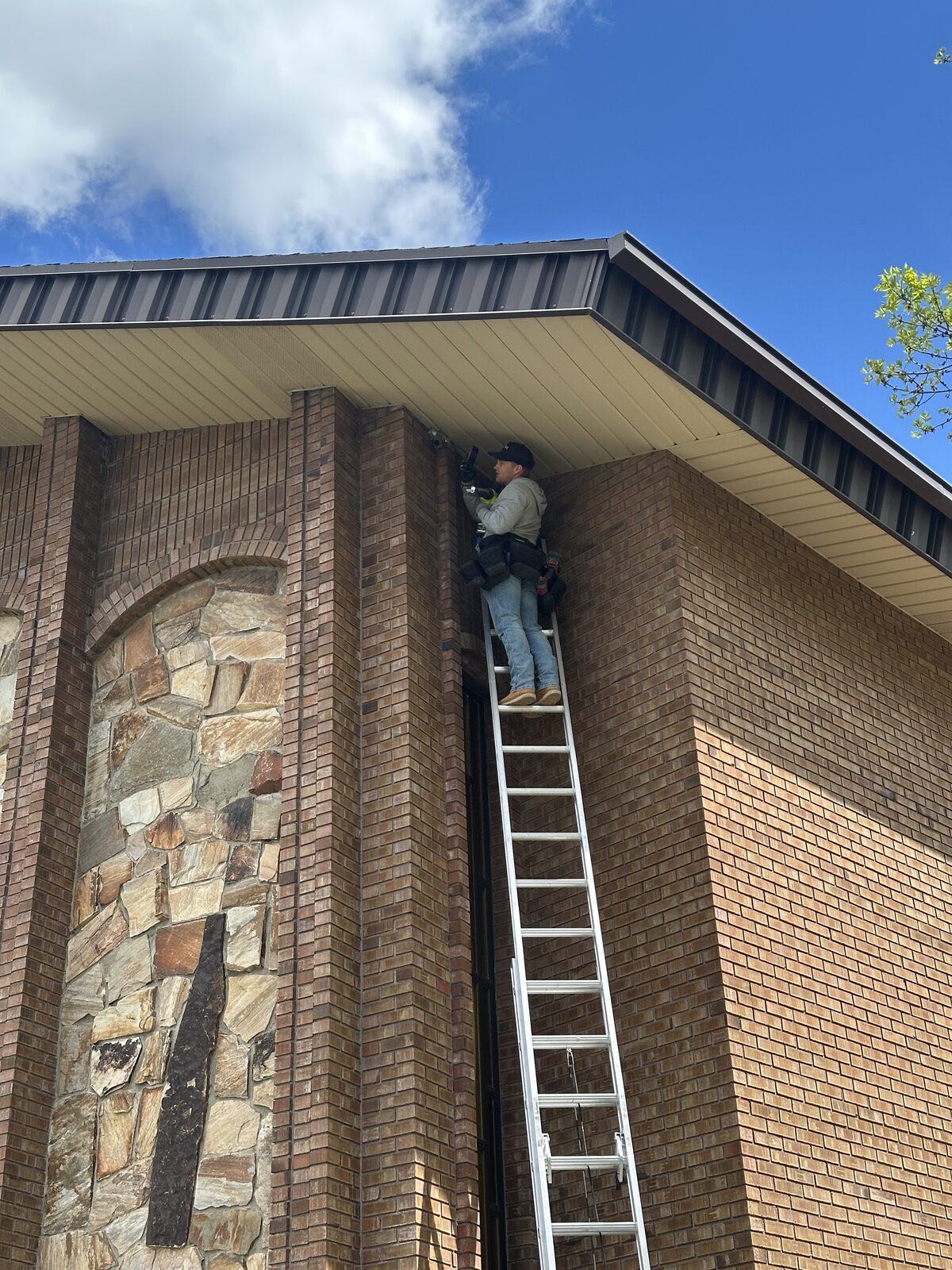
A complete inspection covers all of these locations and often turns up gaps the homeowner did not know existed. Addressing them before a colony arrives is consistently less expensive than exclusion and cleanup after one has been in place for a season or more.
What a Legitimate Wildlife Company Does From the First Call
A properly run wildlife company starts with an on-site inspection. The technician examines the full exterior of the structure, identifies active and potential entry points, assesses whether a colony is present and roughly how large, and discusses the exclusion timeline based on where the calendar falls relative to the Texas maternity season.
The written scope should spell out what is included: exclusion device installation, the waiting period, the follow-up visit to remove the devices and permanently seal the entries, and whether guano cleanup or attic restoration is part of the quoted work or a separate line item. Ask directly what permits or licenses the company holds for this work and whether its technicians are familiar with the Texas Parks and Wildlife Department maternity season guidance. A company that cannot answer both questions clearly is one to be cautious about.
Residential bat exclusion in Texas ranges from a few hundred dollars for a minor job with one or two entry points and a small colony to several thousand dollars when multiple entry points, significant guano accumulation, and insulation replacement are all involved. Anyone who gives you a firm price over the phone without seeing the home is estimating without enough information.
If you are hearing sounds in your attic at dusk, noticing staining along your roofline, or have spotted bats exiting your home at twilight, the right next step is an inspection by a licensed wildlife professional. TPWD guidance limits when exclusion work should take place, so knowing where you stand in the calendar matters before any decisions are made.
Frequently asked questions
Can I seal up bat entry points myself right now?
It depends on the time of year. According to the Texas Parks and Wildlife Department, excluding bats from buildings is discouraged from May 1 through August 15, because pups cannot yet fly during that window. Sealing entry points during this period traps flightless young inside and causes them to die inside your walls. Outside that window, a licensed technician can install one-way exclusion devices and permanently seal the openings after the colony has vacated.
How do I know if I have a colony versus one or two bats?
A single bat that flew in through an open door is very different from a colony roosting in your attic or wall voids. Colony signs include dark staining around small gaps or vents, a strong ammonia odor from accumulated guano, and soft scratching or chittering sounds at dusk and dawn. Seeing bats exit the same spot repeatedly at twilight is the clearest indicator. A professional inspection is the only reliable way to confirm colony size and locate every entry point.
Are bats in Texas protected by law?
Yes. According to the Texas Parks and Wildlife Department, bats may not be hunted, killed, possessed, purchased, or sold, though a bat found inside or on a building occupied by people may be moved, trapped, or killed. That exception covers individual bats, not colony exclusion during the maternity season. Some species also carry federal protections. For a colony, humane exclusion timed outside the maternity window is the method TPWD guidance points homeowners toward.
What does bat exclusion actually cost?
Pricing varies based on colony size, the number of entry points, and whether guano cleanup or attic restoration is part of the scope. Most residential bat exclusion projects in Texas fall somewhere in the range of a few hundred to several thousand dollars. The only accurate way to get a number is an on-site inspection, where a technician can assess the full scope of work before giving you a written estimate.
Related reading
Wildlife in your home? Contact us today.
Call for a phone consultation.