
How to Get Rid of Bats in Your Attic in Texas, Humanely and Legally
Exclusion is the only humane, permanent, and legal method for clearing a Texas attic. Here is how it works, what state law requires, and why timing matters more in Texas than almost anywhere else.
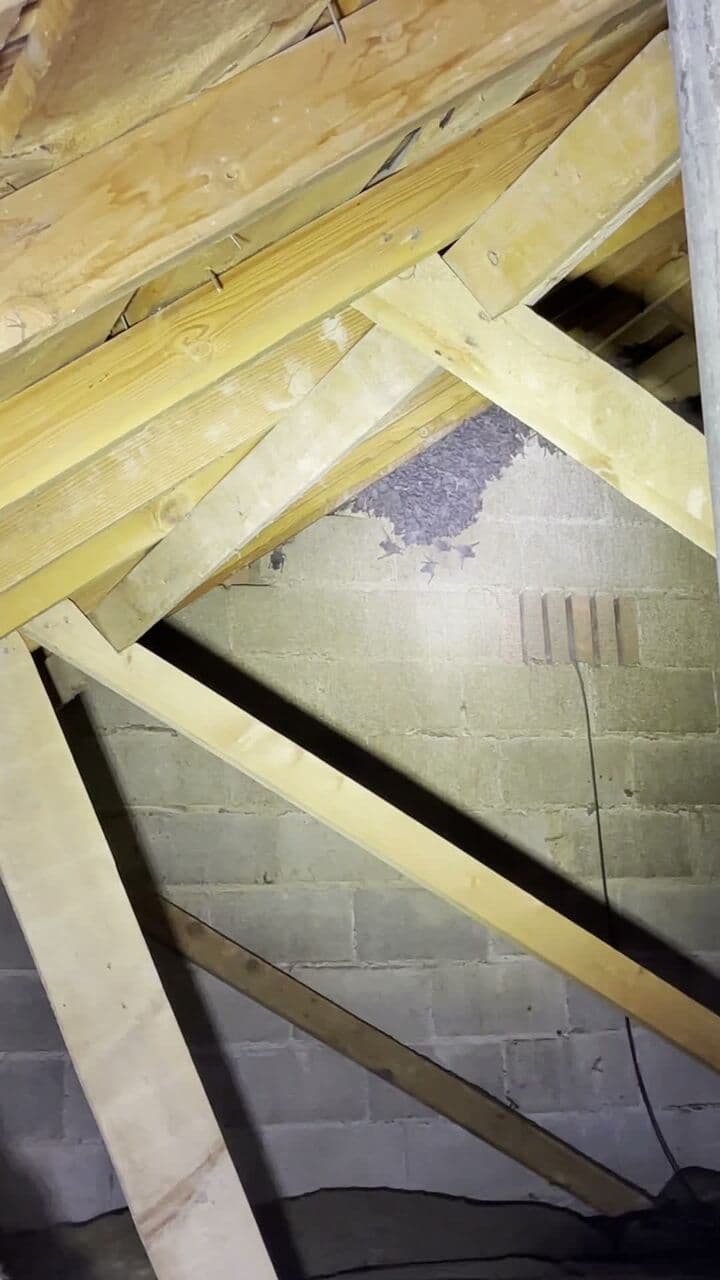
Every summer evening, somewhere around dusk, roughly 1.5 million Mexican free-tailed bats spiral out from under the Ann W. Richards Congress Avenue Bridge in downtown Austin. Tourists line the railings to watch. What most of them do not think about is that the same species putting on that show also roosts in attic spaces across Central and South Texas, and a colony in your home is a very different situation than one on a bridge. If you have been hearing a high-pitched chittering near your roofline after dark, or finding dark, greasy smears along a soffit gap, there is a good chance bats are already in. This guide explains how to get them out legally, humanely, and permanently.
How do you get rid of bats in your attic?
You get bats out with exclusion, not traps, poisons, or sprays. A trained technician installs one-way devices over the gaps the colony is using, so the bats fly out at dusk to feed but cannot get back in when they return. After three to seven days the attic is empty, every entry point gets permanently sealed, and the space is cleaned. For a colony in an attic, it is the humane, permanent approach that keeps the work aligned with TPWD guidance.
Exclusion works because it follows bat behavior. Flying adults in a maternity colony leave the roost each night to hunt insects. Flightless pups remain behind, which is why maternity-season timing matters so much. A one-way exclusion device, typically a polypropylene tube or a cone of screening, lets them exit normally but blocks the return path. Within a week the entire colony has relocated on its own. No trapping, no killing, no animals sealed inside to die in the wall. The entry points stay closed after the devices come down, and the colony has no way back in.
Is it legal to remove bats yourself in Texas?
Bats in Texas have specific legal protections. According to the Texas Parks and Wildlife Department (TPWD), bats may not be hunted, killed, possessed, purchased, or sold. They may be moved, trapped, or killed if found inside or on a building occupied by people, but that exception covers individual bats, not colony exclusion during the maternity season.
TPWD specifically states that excluding bats from buildings is discouraged from May 1 through August 15, when young bats are unable to fly and may be entrapped. That window covers the entire Texas summer, which is when most homeowners first notice the problem. If you seal entry points or install one-way devices during the maternity season, the flightless pups cannot follow the adults out. They are left inside, where they die, and the resulting odor and contamination is worse than the original colony. Spring before May 1 and fall after August 15 are the effective windows that TPWD guidance points homeowners toward for full colony exclusion.
One additional note: the Mexican long-nosed bat (Leptonycteris nivalis) is listed as endangered by both the U.S. Fish and Wildlife Service and the State of Texas. That species does not roost in residential attics, but it is a reminder that Texas takes bat protection seriously, and working with a licensed wildlife specialist protects you from any compliance questions.
The bats most likely in a Texas attic
Texas is home to 32 of the 47 bat species found in the United States, according to TPWD, but three species cause the vast majority of residential attic problems across Austin, San Antonio, Houston, and the Hill Country cities in between.
Brazilian (Mexican) free-tailed bat (Tadarida brasiliensis) is the one you are almost certainly dealing with if you live in Central or South Texas. It is the state flying mammal of Texas, chosen in 1995, and the numbers are hard to ignore: roughly 1.5 million roost under the Congress Avenue Bridge in Austin, and an estimated 15 to 20 million summer at Bracken Cave just outside San Antonio, the largest known concentration of mammals on Earth. The same species that forms those famous outdoor colonies is also the one squeezing through ridge cap gaps and gable vent openings into residential attics across the region. Free-tails are migratory, arriving in spring and heading south by late fall, which is why the largest colonies are a warm-season phenomenon.
Cave myotis (Myotis velifer) is the second most common attic bat in the Hill Country and Central Texas. Larger than most myotis species, cave myotis forms colonies that can number in the tens of thousands in limestone caves and, increasingly, in the warm spaces that building interiors provide. They are strong fliers and can exploit the same narrow gaps that free-tails use. A Hill Country home with both species present is not unusual.
Big brown bat (Eptesicus fuscus) shows up in attics statewide, from Dallas neighborhoods to Houston suburbs. Unlike the free-tailed bat, big browns are year-round residents, and in Texas they may remain in a warm attic rather than entering a deep cave for winter. That means a big brown colony can be an active problem in any season, not just spring through fall.
What the signs look like
The most reliable sign is guano. Bat droppings accumulate in a pile or a streak directly below the entry point, and they crumble to a glittery, fine dust when dry, unlike the compact pellets a mouse or rat leaves. In Texas, guano desiccates fast in the heat. A fresh deposit can turn to brittle powder within days during a July heat wave, which makes it easier to inhale and harder to contain. Look for the pile along a wall, on a ledge, or on the ground below a roofline gap.
Dark, greasy staining around any penetration in the roofline, a gable vent screen, a ridge cap seam, or a gap where the fascia meets the soffit, is a strong indicator that bats are using that point regularly. The oils from their fur transfer to whatever they brush against on every pass, and the stain builds up over weeks into a visible mark. You may also hear a soft chittering or scratching sound from inside the ceiling or wall, especially at dusk as the colony stirs before its nightly exit. The ammonia smell of accumulated urine, sharp enough to detect from a hallway or near an attic hatch, is a sign a colony has been in place long enough to soak into the insulation below.
Why repellents and sealing the hole backfire
Ultrasonic repellers, mothballs, bright lights, and peppermint products have no demonstrated effect on an established colony. Bats are long-lived animals with strong roost fidelity, meaning they return to the same site year after year. They will tolerate a new noise or smell for a few days and then simply ignore it. No commercially available repellent has been shown to reliably clear a maternity colony from a building.
Sealing the entry without exclusion devices is worse, and during the maternity season it goes against Texas Parks and Wildlife Department guidance because it entraps flightless pups. Even outside that window, sealing a hole without confirming the colony has left traps animals inside. They die in the wall space, and the decomposition odor can last weeks. Bats are also extremely good at finding alternate routes into the same structure, so a sealed entry often just shifts the colony to a gap that was not being monitored. The one-way exclusion process works precisely because it lets the bats leave on their own schedule before the openings close for good.
What the removal process looks like
A professional bat exclusion in Texas follows four steps.
Inspection. A technician walks the full roofline and inspects the attic, looking for the entry points bats are actively using. Bats can pass through gaps most homeowners would dismiss as too small to matter, so the inspection covers ridge cap seams, gable vents, soffit returns, chimney flashing, and any place where two building materials meet at an imperfect edge. Colony size is estimated from guano accumulation and from observing the dusk exit flight.
Device installation. One-way exclusion devices go over every active entry. Secondary gaps that are not currently in use get sealed at this stage so the colony cannot simply shift to a new opening when the main entry closes.
Monitoring period. The devices stay in place for three to seven days. Every bat exits nightly to hunt, and each morning the colony is smaller. By the end of the monitoring period, the attic is empty.
Final seal and cleanup. Devices come down, every opening is permanently sealed with the appropriate materials for the roofing type, and the technician confirms the structure is closed. If years of guano have built up, remediation is scheduled separately. Cleanup requires proper respiratory protection and HEPA filtration because disturbing dried guano releases airborne particles that carry health risks.
The real risks: guano and rabies
Bat guano poses two distinct health concerns. The first is histoplasmosis. Dried droppings can carry the spores of Histoplasma capsulatum, the fungus that causes this respiratory illness. According to the CDC, exposure happens by breathing in the spores when contaminated soil or droppings are disturbed. Texas's dry summer heat accelerates guano desiccation, so disturbance, even from walking through an attic or running a fan near an affected space, can aerosolize particles quickly. Never sweep, vacuum, or blow out a bat-contaminated attic without professional-grade respiratory protection and a HEPA-rated vacuum.
The second risk is rabies. Bats are the most common source of rabies transmission to humans in the United States, per the CDC. Bat bites can be small enough to go unnoticed, which is why public health guidance recommends that anyone who wakes up in a room with a bat, or who has had possible contact with a bat, contact their local health department immediately about testing and post-exposure treatment. Do not release the bat before it can be tested. If a colony is roosting in a bedroom wall or an accessible attic space, the exposure risk compounds over time.
Beyond the health concerns, a long-running colony produces structural damage. Guano is acidic and corrodes metal fasteners and framing over time. Urine soaks into insulation, reducing its R-value and creating a persistent odor. A colony that has been in place for several years can require significant remediation after the bats are removed.
When to call, and the best time of year in Texas
Call as soon as you suspect a colony. Bat populations can grow each year as the colony brings pups back to the same roost, and a small group today becomes a larger one in a few seasons. In practical terms, the bigger the colony, the more entry points there are to find and seal, and the more guano there is to clean up. Getting ahead of it early is significantly cheaper.
Texas timing differs from cooler states in a few important ways. The Mexican free-tailed bat, which makes up the majority of Texas attic colonies, arrives from Mexico in spring and stays through fall. The maternity season, when exclusion is restricted, runs May 1 through August 15 per TPWD guidelines. That leaves two effective windows: early spring (roughly March through April 30) before the pups arrive, and late summer into fall (August 16 through October) once the pups are flying and before the colony departs south.
Big brown bats are year-round residents and can be excluded in any non-maternity-season month. If you are dealing with a mixed colony, timing is set by whichever species is present, so a proper inspection to identify the species is the first step.
If you are in the middle of the May through August window and cannot wait, an inspection is still worth scheduling now. You will know exactly what you are dealing with, how large the colony is, and when work can legally begin, with no surprises when the exclusion window opens.
Frequently asked questions
How long does bat removal take in Texas?
Most residential jobs wrap up in one to two weeks from inspection to final seal. Once one-way exclusion devices go on the active entry points, the colony clears on its own within three to seven days because every bat leaves nightly to hunt. We return to remove the devices, seal every gap permanently, and confirm the attic is empty. Guano cleanup, if needed, is scheduled separately based on the volume present.
Can I remove bats from my house in the summer in Texas?
TPWD discourages excluding bats from buildings from May 1 through August 15 because flightless pups are in the roost and cannot follow the adults out. Sealing the entry during that period traps the young inside, which is both inhumane and counterproductive: the pups die, the odor becomes severe, and you still have the colony. A bat found inside your living space can still be handled as an emergency even during that window, but the full colony exclusion must wait.
How much does bat removal cost in Texas?
Cost depends on the number of active entry points, the colony size, the age and condition of the structure, and whether guano cleanup is needed. We provide an on-site inspection and a written estimate before any work begins. Call (512) 910-3825 to schedule.
Will the bats come back after exclusion?
Not when the work is done correctly. Once the entire colony has exited through the one-way devices and every opening is permanently sealed, there is no way back in. Texas Wildlife Specialists backs every exclusion job with a written warranty. If a bat re-enters through any point we sealed, we return at no charge.
Related reading
Wildlife in your home? Contact us today.
Call for a phone consultation.