Bat Removal Dallas, TX
The City of Dallas tells residents to report any contact between a bat and a person or pet to 311. Here are the city and county contacts, the bat-proofing advice the city publishes, and how the Dallas climate affects when a colony can be excluded.
What the City of Dallas asks residents to do
Dallas Animal Services' wildlife page (BeDallas90) is direct about bats. Report any contact between a bat and a person or pet to 3-1-1. Anyone who has touched a bat should call 311 and get medical attention. The city's bat-proofing advice follows CDC guidance:
- Caulk openings larger than a dime.
- Loosely hang clear plastic sheeting or bird netting over the places bats leave, so they can get out but not back in.
- Seal those openings permanently once the bats are gone.
The city also says an orphaned baby bat should be put in a container and reported to 311 or a wildlife rehabilitator. Baby bats usually turn up in summer, when sealing a colony in would be most harmful.
County health and rabies follow-up
Dallas County Health and Human Services (DCHHS), at 2377 N Stemmons Fwy, is the disease-reporting contact for Dallas County on the DSHS list. Its rabies exposure line is (214) 819-2004, and the main number is 214-819-2000. DCHHS advises on whether an exposure needs treatment but does not give post-exposure shots itself, so patients are sent to a hospital or their own doctor. Texas DSHS lists several situations that count as possible bat exposures without an obvious bite, such as a bat found in a room with a sleeping person or a young child. That's why the bat should be kept for testing, not released.
Bats that use Dallas buildings
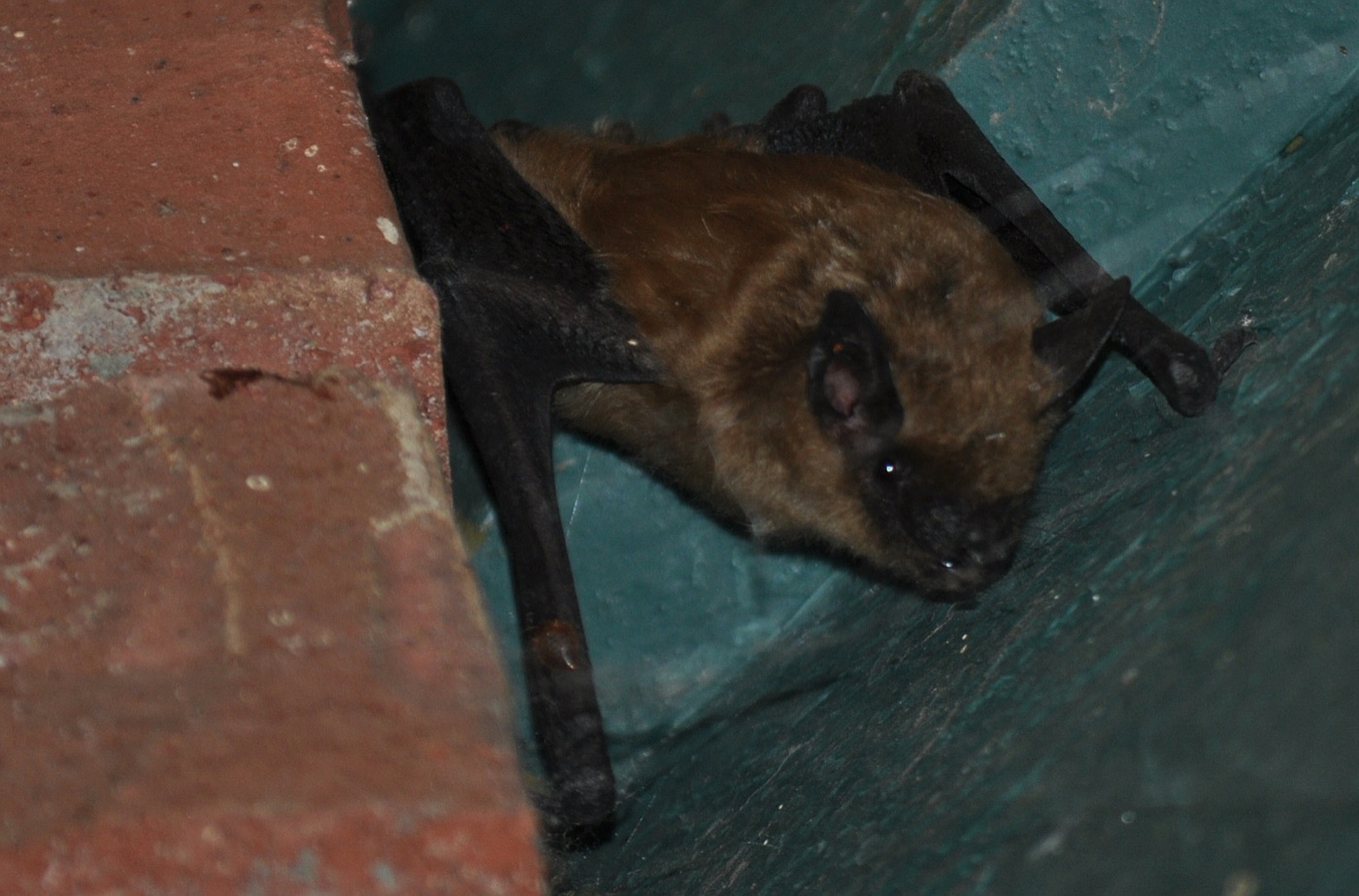
Dallas is east of the 100th meridian, inside the range Texas Tech's Mammals of Texas gives for the evening bat. Evening bats roost in buildings and give birth from late May to mid-June. Big brown bats live across north Texas and form maternity colonies of about 20 to 300 in buildings. Their young are born from May into August. Brazilian free-tailed bats use buildings in every Texas town. Eastern red bats are also common in Dallas trees. They hang in foliage, not attics, so one on a fence or porch post usually leaves on its own.
When to schedule exclusion in Dallas
TPWD discourages excluding bats from buildings from May 1 through August 15. At Dallas Love Field, average lows are 50°F or warmer only from April through October. January averages about 38°F, and October is the wettest month at almost 4.8 inches. In practice, the fall window runs from mid-August until nights turn cold in late October or November. A cold snap can stop bats from flying for several nights and leave an exclusion device waiting for nothing.
Dallas housing and climate snapshot
- Housing units: 599,962 (median year built 1983)
- Built before 1980: 46%; built 2010 or later: 18%
- Single-family detached: 40%; buildings with 10+ units: 40%
- Renter-occupied homes: 58%
- Average January low: 38°F; average August high: 97°F
- Months with an average low of 50°F or warmer: Apr–Oct
Housing figures: U.S. Census Bureau, ACS 2024 1-year estimates (tables B25024, B25034, B25035, B25003) via Census Reporter. Climate: NOAA 1991–2020 normals, Dallas Faa Ap station.
Dallas housing is almost evenly split: about 40% detached houses and 40% units in buildings with 10 or more apartments. Nearly half was built before 1980. On older pier-and-beam houses and early ranch homes, the common gaps are at gable vents, the corners where fascia meets soffit, and the attic side of chimneys. On apartment buildings, bats often use expansion joints and gaps in the siding. Sealing those usually needs the property owner's approval and a lift.
Common questions
Should I call 311 about a bat in Dallas?
Yes, if the bat had contact with a person or pet, or a person touched it. Dallas Animal Services asks for those reports through 3-1-1, and anyone who touched a bat should get medical attention.
What is the Dallas County rabies exposure number?
Dallas County Health and Human Services takes rabies exposure calls at (214) 819-2004. DCHHS gives advice but doesn't give post-exposure treatment, so patients are sent to a hospital or their doctor.
How small a hole can a bat use in Dallas homes?
The City of Dallas advises caulking any opening larger than a dime. CDC guidance says bats can fit through gaps as small as a quarter inch.
Can I seal bats out of my Dallas attic in June?
It isn't recommended. TPWD discourages exclusion from May 1 to August 15, when pups can't fly, and evening bat and big brown bat young are born during that period.
I found a baby bat on the ground in Dallas. What now?
Don't touch it with bare hands. The city says to put it in a container and contact 311 or a wildlife rehabilitator.
Nearby city guides
Sources
- Dallas Animal Services (BeDallas90): wildlife and bats
- Texas DSHS: Dallas County disease reporting contacts
- Dallas County Health and Human Services
- Mammals of Texas (TTU NSRL): evening bat
- Mammals of Texas (TTU NSRL): big brown bat
- Mammals of Texas (TTU NSRL): Brazilian free-tailed bat
- Mammals of Texas (TTU NSRL): eastern red bat
- TPWD Outdoor Annual: nongame and other species (bats)
- Texas DSHS: bat exposure scenarios and capture tips
- CDC: preventing rabies from bats
- Census Reporter: Dallas ACS 2024 profile
- NOAA NCEI 1991–2020 monthly normals (Dallas Faa Ap)
Other Texas cities we serve
We serve all of Texas. Here are nearby service areas.
Other wildlife removal services we offer here
Dallas bat removal, done right.
Call for a phone consultation. Written warranty. Licensed by Texas Parks & Wildlife.