
Bat Removal El Paso, TX
El Paso's desert climate and Trans-Pecos location mean it has a different set of house bats than the rest of Texas. Here are the city contacts, the species that use El Paso buildings, and how the dry, cool-night climate affects exclusion.
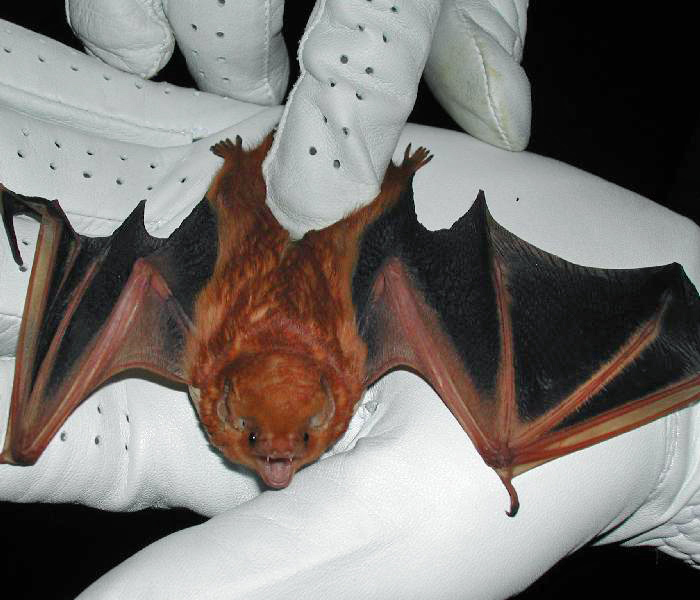
El Paso has desert bats
Texas Tech's Mammals of Texas places El Paso in the Trans-Pecos, the far western region with its own bat species. The pallid bat is common in the western half of Texas. It roosts in attics, under eaves, behind signs and shutters, and in adobe buildings, usually in colonies of 12 to 100. Young are born from early May to mid-June and fly at about six weeks. The canyon bat (American parastrelle) lives in the region's mountains and canyons. It forms small maternity colonies in rock crevices or buildings and gives birth in June and July. The Yuma myotis spends summers in the Trans-Pecos and usually roosts near water. Big brown bats in the Trans-Pecos usually have one pup, not the twins common farther east. Brazilian free-tailed bats migrate through and spend summers here, as they do statewide.
Texas Tech also notes that pallid bats drop to the ground to catch prey such as crickets and scorpions, then eat it there or carry it to a night roost. Finding one at ground level is more common here. Still, any bat that can't fly or is out in daylight should be treated as possibly sick.
El Paso contacts
- Animal Services, through 311: El Paso Animal Services says every animal bite must be reported and lists bats among the high-risk wildlife for rabies. Call 911 for emergencies.
- Wildlife questions: the city refers some wildlife questions to TPWD's El Paso office at (915) 849-4080.
- Bats in the house: in October 2008, KVIA reported city officials saying that 16 bats had tested positive for rabies in El Paso that year. Officials told residents to confine any bat that gets into a home or business, call Animal Services, and get medical advice after any contact.
Climate and timing
El Paso International averages only about 8.8 inches of rain a year. The average January low is about 34°F, and average lows reach 50°F only from April through October. Desert nights also drop fast in spring and fall. Exclusion devices need several warm nights in a row for bats to leave. TPWD discourages exclusion from May 1 to August 15, so El Paso's best windows are late August through mid-October and a short spring period after nights warm up but before pallid bat pups arrive in May.
El Paso housing and climate snapshot
- Housing units: 267,769 (median year built 1985)
- Built before 1980: 43%; built 2010 or later: 17%
- Single-family detached: 66%; buildings with 10+ units: 12%
- Renter-occupied homes: 38%
- Average January low: 34°F; average August high: 94°F
- Months with an average low of 50°F or warmer: Apr–Oct
Housing figures: U.S. Census Bureau, ACS 2024 1-year estimates (tables B25024, B25034, B25035, B25003) via Census Reporter. Climate: NOAA 1991–2020 normals, El Paso Intl Ap station.
About two-thirds of El Paso homes are detached houses, and 43% were built before 1980. Stucco homes with flat or low-slope roofs are common. The gaps we look for are along parapet caps, at canales (roof scuppers), where stucco has cracked away from window and roof framing, and behind loose wood trim on older adobe-style homes. Pallid bats will also use roofed patios and carports as night roosts, which leaves droppings without any bats in the attic.
Common questions
What bats live in El Paso houses?
Texas Tech's Mammals of Texas lists pallid bats (attics, eaves, behind shutters), canyon bats (buildings and rock crevices), Yuma myotis, big brown bats, and summer Brazilian free-tailed bats in the Trans-Pecos.
How do I report a bat bite in El Paso?
Call 311 for El Paso Animal Services. The city says every animal bite must be reported and lists bats as high-risk for rabies. Call 911 in an emergency, and get medical care.
Why do I find bat droppings on my El Paso patio but no bats?
Pallid bats often use covered patios and porches as night feeding roosts and leave between meals. That doesn't always mean there's a colony in the attic.
When can bats be excluded in El Paso?
TPWD discourages exclusion from May 1 to August 15. El Paso's cool desert nights shorten the usable window, so late August to mid-October is usually best.
Do bats in El Paso carry rabies?
Some do. The city lists bats as high-risk rabies wildlife, and KVIA reported 16 rabies-positive bats in El Paso in 2008. Don't handle bats, and report any contact.
Nearby city guides
Sources
- El Paso Animal Services: animal protection
- KVIA: rabid bats in El Paso (2008)
- Mammals of Texas (TTU NSRL): pallid bat
- Mammals of Texas (TTU NSRL): American parastrelle (canyon bat)
- Mammals of Texas (TTU NSRL): Yuma myotis
- Mammals of Texas (TTU NSRL): big brown bat
- Mammals of Texas (TTU NSRL): Brazilian free-tailed bat
- TPWD Outdoor Annual: nongame and other species (bats)
- Texas DSHS: bat exposure scenarios and capture tips
- Census Reporter: El Paso ACS 2024 profile
- NOAA NCEI 1991–2020 monthly normals (El Paso Intl Ap)
Other Texas cities we serve
We serve all of Texas. Here are nearby service areas.
Other wildlife removal services we offer here
El Paso bat removal, done right.
Call for a phone consultation. Written warranty. Licensed by Texas Parks & Wildlife.