Birds in a Dryer or Bathroom Vent in Texas: What to Do First and What the Law Allows
A bird in an exhaust vent is two problems at once: a blocked appliance and, possibly, a protected nest. Which one you deal with first depends on the vent and the bird.
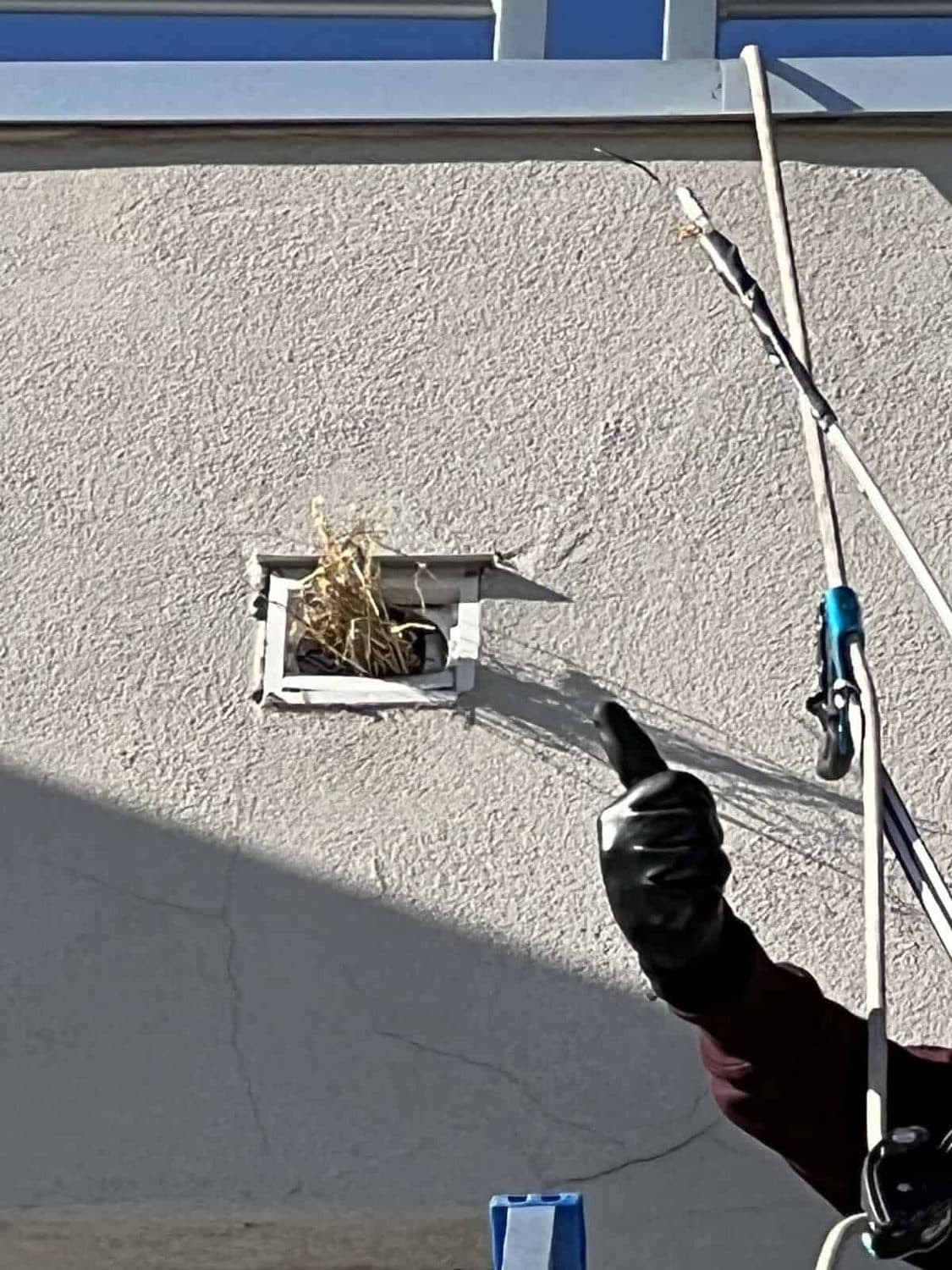
Chirping from the laundry room wall is a strange sound the first time you hear it. It usually means a bird has found the exterior end of an exhaust vent and started building inside it. In Texas, the right response comes in a specific order: figure out which vent it is, stop using the dryer if that is the one involved, identify the bird, and only then decide what happens to the nest. Skip ahead and a simple vent call can turn into a fire risk or a legal problem.
Figure out which vent the bird is using
Many homes have several exhaust terminations on an outside wall or the roof: the clothes dryer, one or more bathroom fans, and sometimes a kitchen range hood. From the yard they can look alike. A few clues help tell them apart.
- Dryer vent. Usually low on the wall near the laundry room, often with a hinged flap or louvers. If the bird is here, you may notice longer drying times or a laundry room that feels warmer than usual.
- Bathroom fan vent. Often on the roof or high on a wall near a bathroom. A blocked bath fan gets louder or stops moving air, and the mirror stays fogged longer.
- Kitchen hood vent. On the wall or roof above the stove.
Our bird in vent service page lists the signs homeowners most often notice: chirping from the vent, reduced dryer performance, and unusual odors. Nesting material hanging out of the hood, or a flap that no longer closes, confirms it from the outside.
If it is the dryer, stop using it
This is the one step that should not wait. The U.S. Fire Administration reports that failure to clean was the leading factor contributing to the ignition of home clothes dryer fires from 2018 to 2020, at 31 percent (USFA: Appliance and Electrical Fire Safety). Its dryer safety guidance tells homeowners to check that the venting system is not damaged, crushed, or restricted, and to make sure the outdoor vent covering opens when the dryer is operating (USFA: Clothes Dryer Fire Safety).
A nest in the termination defeats both. Dry grass and twigs sit right where hot, lint-heavy air is supposed to leave the house, and the flap cannot close or open properly around them. Line-dry for a few days. A bathroom fan vent is less urgent from a fire standpoint, but a fan pushing air into a packed nest is not venting anything.
Identify the bird before anyone touches the nest
What happens next depends on the species. House sparrows and European starlings can both turn up in vents, and both are non-native. The U.S. Fish and Wildlife Service says the Migratory Bird Treaty Act does not apply to non-native, human-introduced species (USFWS: Migratory Bird Treaty Act). Texas Parks and Wildlife Code §64.002 also excepts European starlings and English sparrows, along with feral rock doves, from the state's nongame bird protections (Tex. Parks & Wild. Code §64.002).
Native songbirds are protected. Carolina wrens, Bewick's wrens, house finches, and eastern phoebes all appear on the federal list of migratory birds covered by the MBTA (50 CFR 10.13). Texas protects them too. The same section of the Parks and Wildlife Code says no person may disturb or destroy the eggs, nest, or young of a bird that is not a game bird, and §64.003 adds that no one may destroy or take the nest, eggs, or young of a bird the code protects (Tex. Parks & Wild. Code §64.003).
A technician identifies the bird from the adults coming and going, the nest material, and any eggs or chicks visible at the termination.
Federal and Texas nest rules are not the same
The U.S. Fish and Wildlife Service updated its nest policy in January 2025, and the definitions are practical. An in-use nest contains viable eggs or nestlings. A nest that birds are still building, with no eggs yet, counts as inactive, and so does a nest the young have fledged from (USFWS Migratory Bird Permit Memorandum MBPM-2, 2025).
Under that federal policy, destroying an in-use nest of a protected species requires authorization. An inactive nest can be destroyed without a federal permit, provided no person keeps the nest or its contents. The memo puts the burden on whoever does the work to make sure the nest really is inactive. It also warns that inactive nests may still be protected by state law.
In Texas, they are. The state rule on disturbing or destroying the nest of a native nongame bird makes no distinction between in-use and inactive nests. So the federal inactive-nest allowance is not the end of the question here. Before a native bird's nest comes out of a vent, the Texas Parks and Wildlife Department is the agency to confirm what is allowed.
Moving a native bird's nest to a nearby tree or bush counts as relocation, and USFWS says relocating a nest requires authorization whether the nest is in use or inactive.
If a native bird has eggs or chicks in your bathroom fan vent, the realistic plan may be to wait until the young fledge, confirm with TPWD what Texas law allows for that nest, and then close the vent properly. We will not promise to pull every active nest the same day. What we can do is explain which situation you have and plan around it.
What the fix includes, and who handles which part
Once the bird is out and the nest can lawfully come out, the job has three parts. Our bird in vent removal covers the bird and nest removal, cleaning the vent of nesting debris, droppings, and blockages, and installing a professional-grade vent cap so birds cannot get back in.
Some problems sit deeper in the house. If the duct behind the dryer is crushed, disconnected, or damaged inside a wall, that repair may belong to an appliance technician or a duct contractor. Before work starts, know which part of the system each person handles:
- The exterior termination and whatever the bird built in it: our work.
- Debris in the vent opening and the reachable run of duct: cleaned as part of the removal.
- A crushed or disconnected duct inside the wall or behind the appliance: often a separate repair, and worth flagging if the dryer still dries slowly after the nest is gone.
Why a homemade screen is the wrong fix
Hardware cloth zip-tied over a dryer vent looks tidy, but it recreates the blockage it was meant to prevent. The International Residential Code requires dryer exhaust terminations to have a backdraft damper and says screens shall not be installed at the duct termination (2012 International Residential Code, M1502.3). Texas adopts the IRC, as it existed on May 1, 2012, as its municipal residential building code, and cities can amend it (Tex. Loc. Gov't Code §214.212). A screen catches lint on every load until the vent is choked again.
The right cover depends on the appliance. A dryer needs a cap with a damper that opens under airflow and closes when the dryer stops. A bathroom fan termination has different airflow and different hardware. Matching the cover to the vent is part of the job.
Best time to act in Central Texas
The USFWS nest memo recommends doing nest-related work outside nesting season because it lowers the risk of harming protected birds. For a homeowner, that means the easiest moment to put a proper cover on a vent is while it is empty. If an old nest is still inside, the species question above applies before it comes out. If you have heard birds in a vent earlier this year and it has gone quiet, a cap installed now helps keep next season's nest out.
Birds in vents are a call we take from Austin to Temple and from San Marcos to San Antonio. Hear chirping behind the dryer or bath fan? Call (512) 910-3825 or schedule online, or see our bird in vent service in Austin.
Frequently asked questions
Is it illegal to remove a bird nest from my dryer vent in Texas?
It depends on the bird and whether the nest is in use. House sparrows and European starlings are non-native and are not covered by the federal Migratory Bird Treaty Act, and Texas Parks and Wildlife Code §64.002 excepts them from state nongame bird protection. Native songbirds are a different case. Texas Parks and Wildlife Code §64.002 says no person may disturb or destroy the eggs, nest, or young of a bird that is not a game bird, and that state rule does not depend on whether the nest is in use. Federal rules add another layer. Check with the Texas Parks and Wildlife Department before a native bird's nest is removed.
Can I keep using my dryer if a bird is nesting in the vent?
If the vent may be blocked, stop using the dryer until the exhaust is cleared. The U.S. Fire Administration reports that failure to clean was the leading factor in home clothes dryer fires from 2018 to 2020, and it advises making sure the venting system is not restricted and that the outdoor vent covering opens when the dryer is operating. A nest packed into the termination does both of the things that guidance warns against.
Should I move the nest into a nearby tree?
Not if the nest belongs to a native bird. The U.S. Fish and Wildlife Service's 2025 nest memorandum says relocating a migratory bird nest requires authorization whether the nest is in use or inactive, because moving it means collecting and possessing it. Texas law also bars disturbing the nest of a native nongame bird, so check with the Texas Parks and Wildlife Department first.
What kind of vent cover keeps birds out of a dryer vent?
A cover built for dryer exhaust, with a damper that opens under airflow and closes when the dryer stops. The International Residential Code requires a backdraft damper at a dryer exhaust termination and says screens shall not be installed there, because a screen collects lint. Bathroom and kitchen exhaust vents have different requirements, so the cover has to match the appliance.
Related reading
Wildlife in your home? Contact us today.
Call for a phone consultation.