
High-Rise Bat Removal in Texas
A Texas apartment tower or hotel may offer bats a chain of protected openings along masonry joints, metal panels, signage, and rooftop equipment screens. We identify the active route at dusk, inspect the surrounding façade, and build a work plan that fits the property.
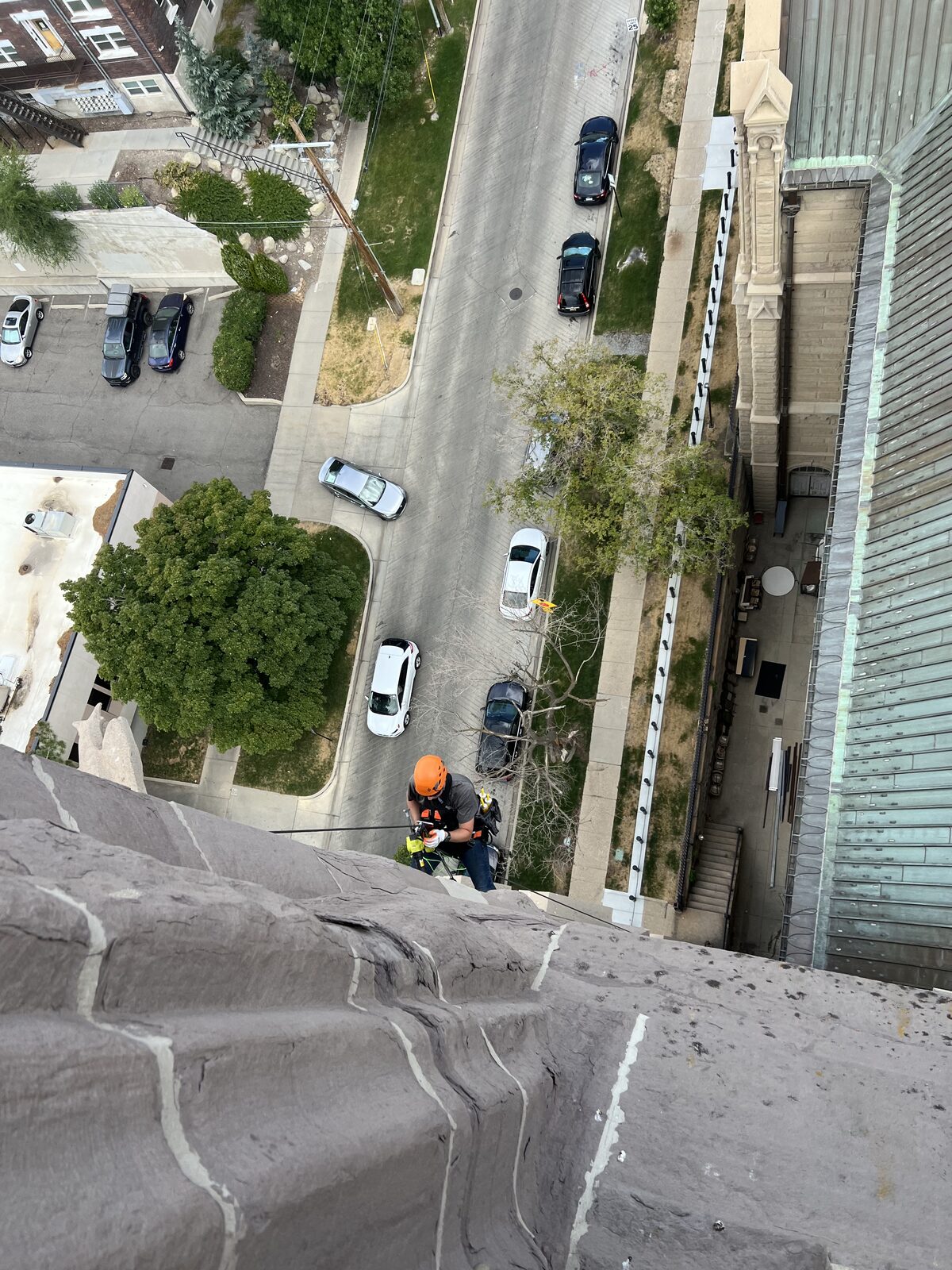
Bat activity can travel across a long Texas façade
A property manager may first notice bats near a parking level, a rooftop sign, or an upper mechanical screen. The roost can be several floors away from that sighting. An effective survey combines activity observations with a close review of the exterior details bats can use.
Texas buildings also stay busy late into the day. Access and exclusion have to account for entrances, loading areas, tenant traffic, and the people working below the drop zone.
A work plan built for Texas
Observe the evening exit
Activity observations help connect visible bats with the likely roost openings before technicians commit to a wall-access route.
Read the panel and masonry joints
The exterior survey checks expansion joints, panel returns, roof screens, vents, and sign attachments around the active area.
Stage the one-way devices
Active openings receive one-way exits while inactive gaps are closed in an order that leaves bats a clear path out.
Verify and finish the wall
After the roost clears, exclusion devices come down, final openings are repaired, and the treated areas are documented.
The work window is partly a building-operations decision
Exterior temperature and sun exposure affect when technicians can work safely on a wall. The plan may shift work between elevations or use shorter access periods rather than holding one side of the building all day.
Downtown and mixed-use properties need clear ground control. We define where ropes, technicians, and materials will be overhead so the manager can reroute foot traffic without closing more of the property than necessary.
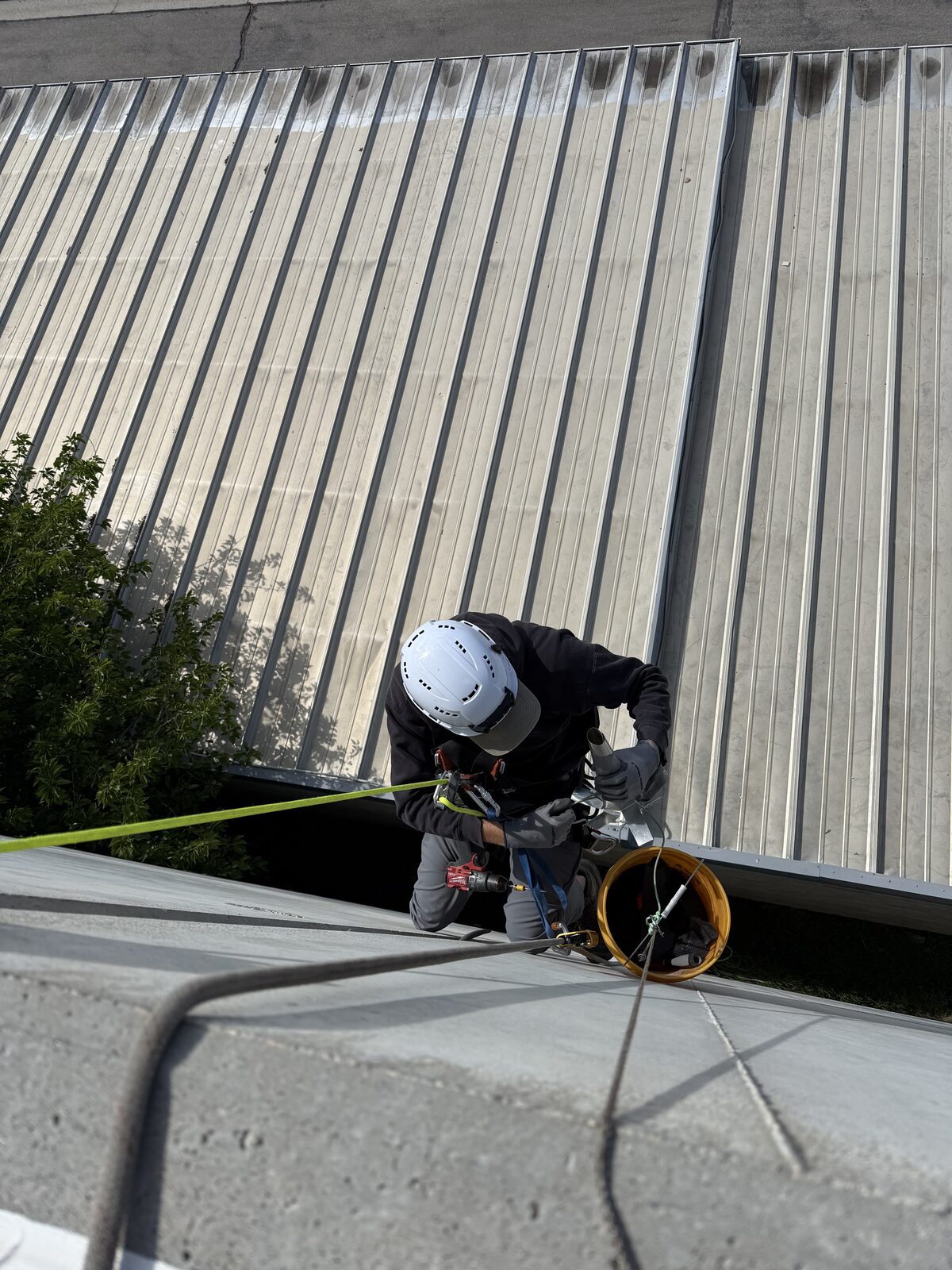
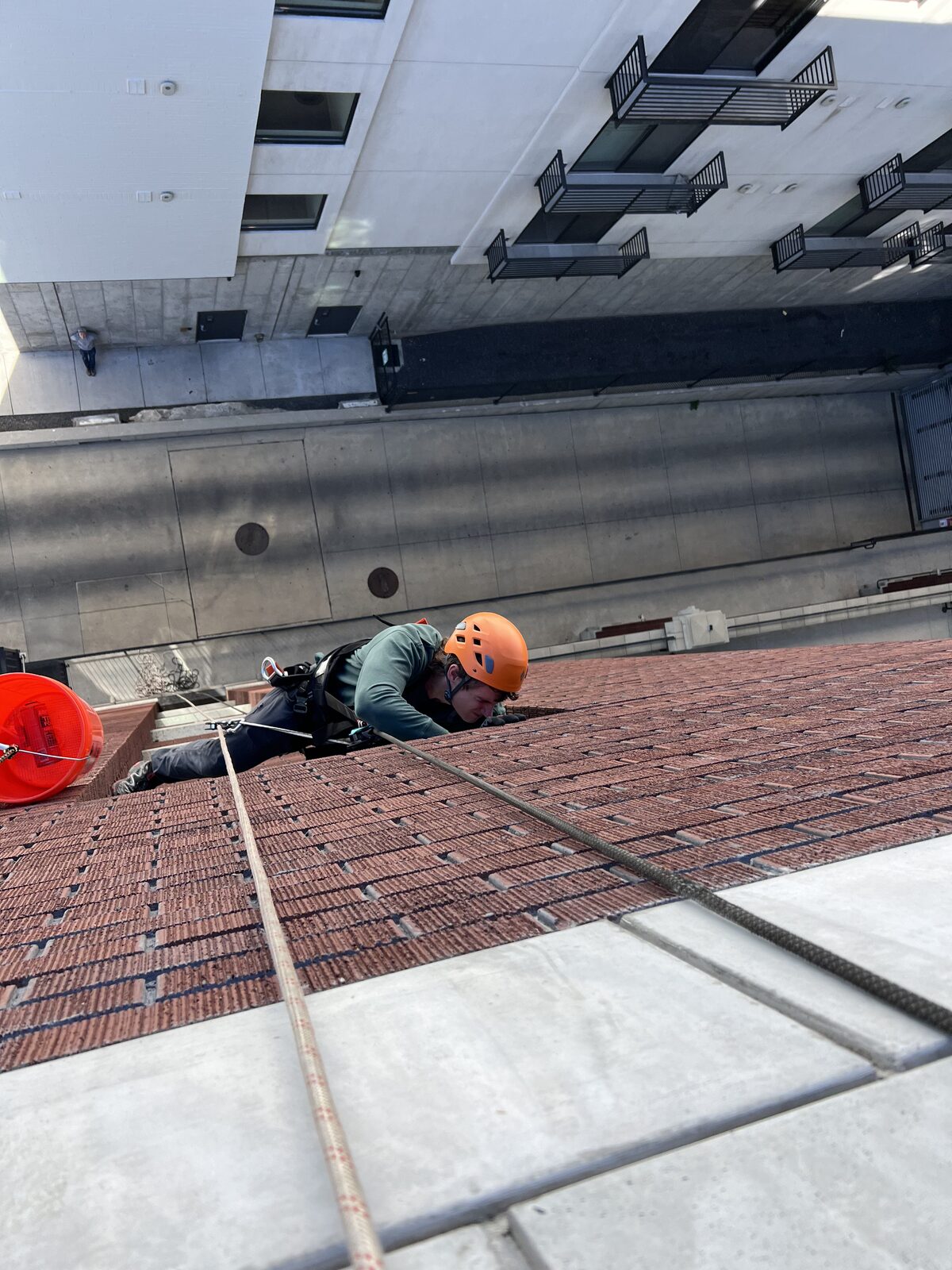
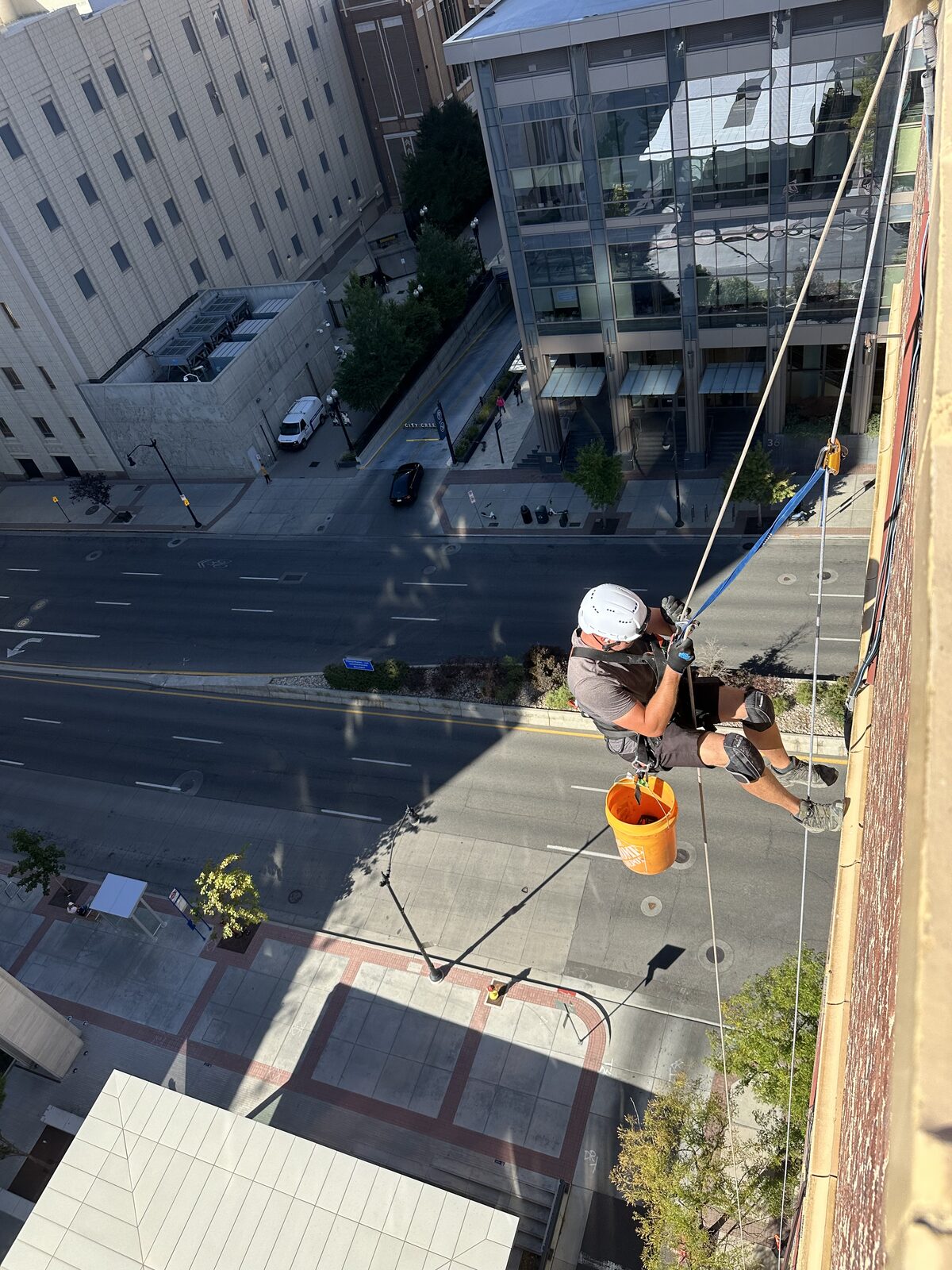
What upper-story bat exclusion looks like
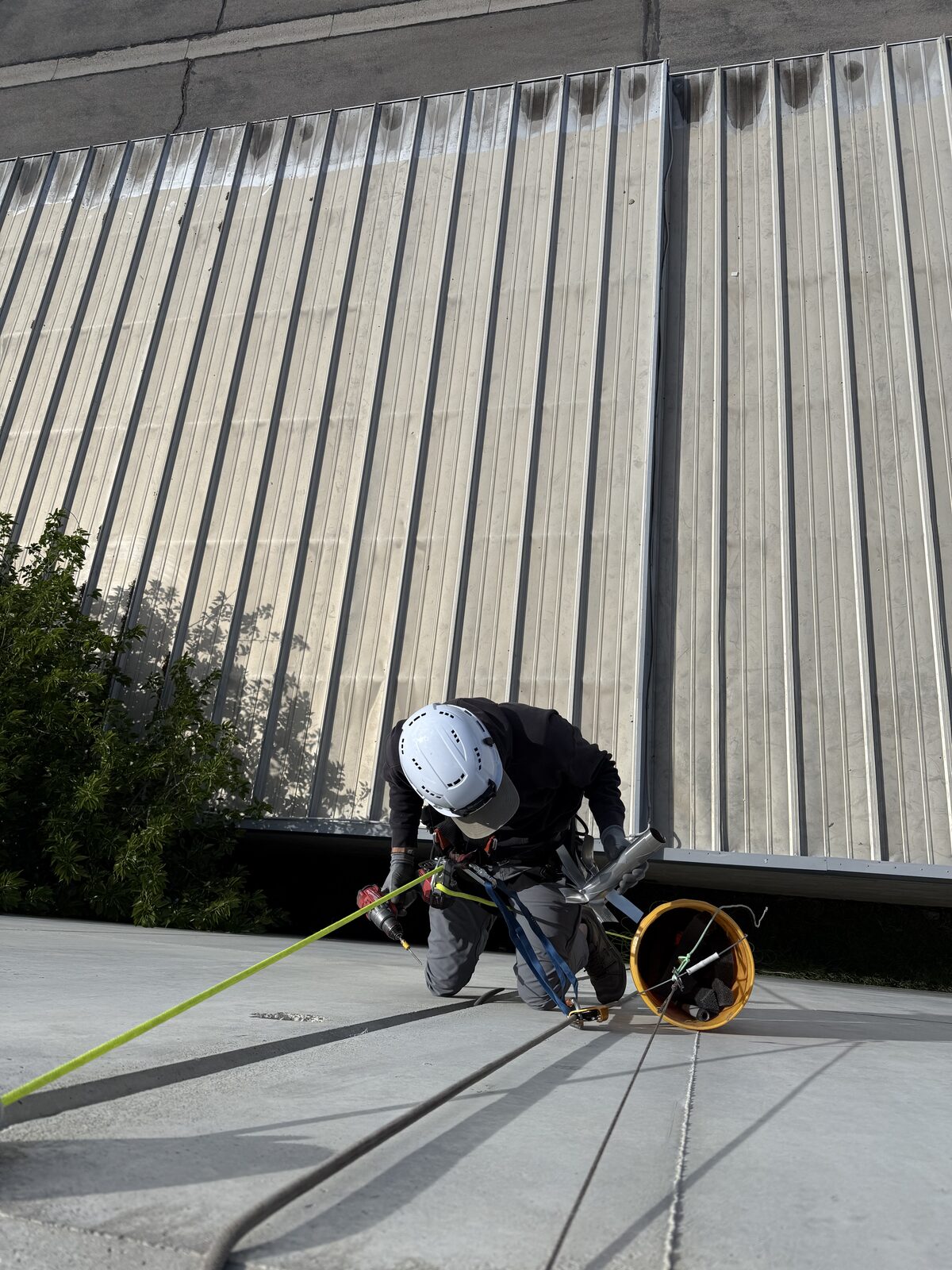
These field photos show close exterior inspection, rope positioning, and repair work at openings that cannot be reached safely from a ladder.
Texas timing depends on the colony
Texas Parks and Wildlife Department recommends phased exclusion and warns against trapping flightless young. The right date depends on whether the building is being used as an active maternity roost.
A survey can establish current activity and prepare the repair scope while the property manager coordinates roof access and tenant notices.
Read the Texas Parks and Wildlife Department exclusion example
Texas high-rise exclusion questions
Does Texas use one statewide date range for every bat exclusion?
Texas guidance focuses on the colony's condition rather than one universal calendar. If flightless young are present, exclusion has to wait until they can leave with the adults.
Can a high-rise bat survey be done after business hours?
Activity observations often happen near dusk, while close exterior inspection is planned for safe daylight access. The schedule can combine both without treating them as the same task.
How do you work around a hotel entrance or apartment garage?
The access plan identifies the area below each drop and coordinates temporary pedestrian or vehicle controls with property management before technicians descend.
What if bats move to another joint after sealing?
That risk is why the survey includes adjacent joints and repeating exterior details. Inactive gaps are closed in sequence while the active exits remain available through one-way devices.
Can the property stay open during the work?
Most exterior exclusion can occur while the property operates. Specific entrances, balconies, or loading areas may need short restrictions when technicians are working directly above them.
Other Texas bat-removal options
Bats using an upper floor in Texas?
Tell us where the activity appears, when it is most visible, and how the roof or street level is controlled. That is enough to start an inspection plan.