Commercial Bat Removal for Business Properties in Texas
A bat colony in a commercial building is a liability, a health exposure, and a scheduling problem all at once. Here is what TPWD guidance allows, when, and how phased commercial exclusion actually runs.
Texas Has More Bat Species Than Any State, and They Like Commercial Buildings
A bat problem at a Texas home may be a handful of animals in an attic. A bat problem at a commercial building is a different scale of work. The long rooflines, parapet walls, and rooftop mechanical curbs on a Dallas-Fort Worth distribution center, or the masonry and bell tower on an old San Antonio church, give a colony far more room to settle and grow than any house. According to the Texas Parks and Wildlife Department, Texas is home to more bat species than any other state. The Mexican free-tailed bat, the one famous for streaming out from under the Congress Avenue Bridge in Austin each evening, is also a common resident of Texas buildings. It can squeeze in through gaps most contractors would dismiss as too small to matter, which is why the openings letting a colony in are almost never visible from the ground.
For a Texas business, this is bigger than a wildlife matter. It is a liability, a health-code exposure, and a documentation problem at the same time. What changes on a commercial job is the scale, the legal timing, and who is exposed while the colony is there.
Why Commercial Bat Problems Are Different From a House Call
Commercial bat jobs get harder fast because the building is bigger, people are inside, and the paper trail matters. A larger building usually means more entry points. An occupied building means staff, customers, students, or tenants may be exposed. That changes the job.
Scale changes the method. A house might have two or three entry points. A large Texas warehouse or office campus can have dozens, scattered across roof seams, loading-dock canopies, rooftop HVAC curbs, and the seams where one addition meets another. No single one-way door and a weekend will fix that. It takes a mapped, phased exclusion built around the structure. And in much of Texas the warm climate keeps bats active for a long stretch of the year, so a colony has months to entrench before anyone notices.
Occupancy changes the schedule. Guano cleanup inside an active warehouse, a school, or a medical office cannot run the way it would in an empty attic. The work has to be contained, ventilated, and timed around operations, with people kept clear of the affected zone while it is handled. A good commercial crew in Texas plans around your hours rather than asking you to plan around theirs.
Is There a Legal Window for Commercial Bat Exclusion in Texas?
Yes, and it applies to a Texas business exactly the way it applies to a homeowner. According to the Texas Parks and Wildlife Department, excluding bats from buildings is discouraged from May 1 through August 15, because the pups are too young to fly and sealing the building would trap them inside. A commercial property should not force exclusion into that window, and a reputable commercial wildlife company will not schedule it there.
What a Texas business can do during the maternity season is everything that leads up to the exclusion. A technician can inspect the structure, map every active and potential entry point, measure the depth and spread of guano, document the health exposure, and write a remediation plan with an exclusion date set for the day the season closes. For a property manager, that turns a frustrating wait into a scheduled project with a scope and an approved budget.
Bats in Texas are protected under state wildlife rules, and some species also carry federal protections. The U.S. Fish and Wildlife Service lists the northern long-eared bat as endangered, and white-nose syndrome has driven steep declines across several species. Texas bats also carry real ecological weight: a big colony clears a serious volume of night-flying insects, which is part of why humane exclusion, timed outside the maternity window, is the proper path. If a vendor offers to spray, poison, or trap a colony out on your timeline, stop and call someone who works within Texas law instead.
The Health and Liability Side: Guano, Histoplasmosis, and Duty of Care
A bat colony in an occupied Texas building carries two liabilities a homeowner rarely weighs: occupational health exposure and the paperwork a carrier or a tenant will demand. Both trace back to the guano. Accumulated droppings are not just a smell and a dark stain on the ceiling. They are a recognized workplace hazard.
Bat guano can harbor Histoplasma capsulatum, the fungus behind histoplasmosis, a respiratory illness people contract by breathing in spores from disturbed droppings. The CDC and the National Institute for Occupational Safety and Health (NIOSH) publish specific guidance on occupational exposure to bird and bat droppings, covering containment, ventilation, and respiratory protection for anyone working in or near the material. In a workplace that guidance is not optional reading. A Texas employer who knows guano is piling up where staff work has a hazard to address.
This is where commercial remediation earns its place in the budget. Going after a guano deposit with a shop vacuum and a paper dust mask is exactly how spores get kicked into the air and inhaled. Done right, remediation isolates the area, suppresses dust, removes the material under controlled conditions, decontaminates the surfaces, and disposes of the waste correctly. Then it gets documented, because the building owner, the insurer, and in a leased space the tenant all need a record that the hazard was handled properly.
What Commercial Bat Remediation Actually Looks Like
Commercial bat remediation in Texas runs in four phases: inspection and mapping, timed exclusion, guano remediation, and prevention. Each phase produces a record, and on a large building each one can take longer than an entire residential job. On a commercial job, the sequence is the strategy.
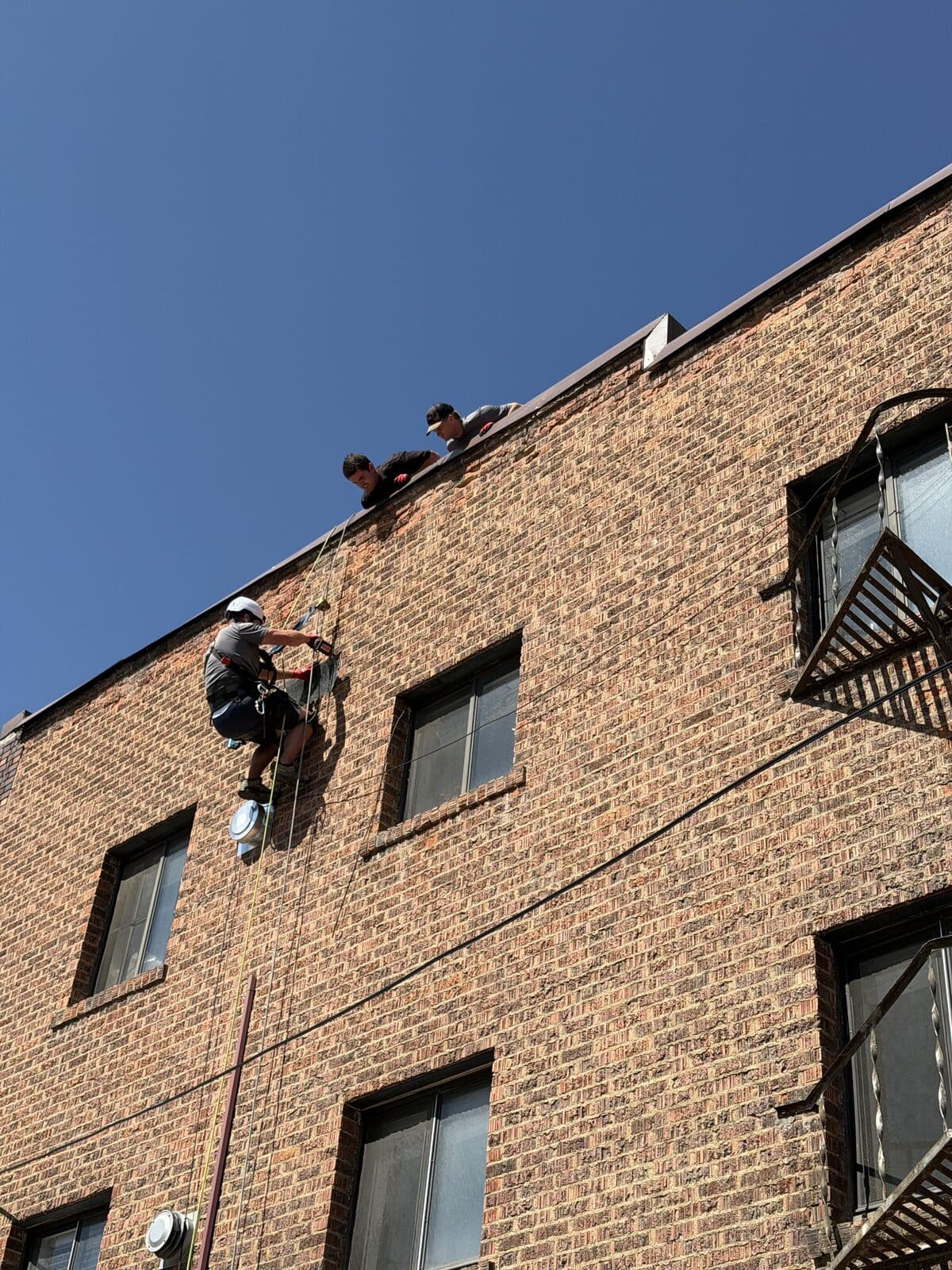
Phase one, inspection and mapping. A technician surveys the whole structure, inside and out: roofline, parapets, expansion joints, rooftop units, soffits, loading areas, and any interior roost evidence. The output is a map of active entry points, an estimate of colony size and species, and a measured read on guano accumulation. On a commercial building this usually means rooftop access and a lift, not a stepladder.
Phase two, timed exclusion. Once the season is open, one-way exclusion devices go on the active entry points. They let bats leave to feed at night and block the way back in. On a large Texas structure the devices stay up longer than on a house, because a bigger colony with more exits takes more time to clear out completely. The building is monitored to confirm the colony is gone before anything is sealed.
Phase three, guano remediation. With the colony excluded, the accumulated guano comes out under containment, contaminated insulation or materials are removed where needed, and surfaces are decontaminated. This is the phase scheduled around your operations and kept clear of occupied areas.
Phase four, prevention. Every entry point and likely future gap is permanently sealed with commercial-grade materials: exterior-rated sealant, metal flashing, hardware cloth over vents, and mesh at equipment penetrations. Many Texas properties then shift to a maintenance inspection schedule, because a building that drew one colony will draw the next one if the envelope stays open.
Which Texas Commercial Properties Get Bat Problems Most Often?
A handful of property types come up again and again across Texas: warehouses, schools, churches, multifamily buildings, and older office or retail space. The pattern is simple. Tall, complex, or aging structures with warm protected cavities and an exterior that has not been sealed in years give a colony exactly what it is looking for.
- Warehouses and distribution centers. The logistics corridors around Dallas-Fort Worth, Houston, and San Antonio have long rooflines, expansion joints, and rooftop equipment curbs that add up to dozens of potential entries, and high open ceilings let a colony settle in before anyone looks up.
- Schools and churches. Older masonry, steeples, towers, and attic voids give bats protected roosting space, and these buildings carry the highest sensitivity because children and congregations are the occupants.
- Multifamily and apartment buildings. Shared attics and parapet walls let a colony move between units, and a Texas property manager owes duty-of-care to every tenant plus the documentation a lease and an insurer require.
- Offices, medical, and retail. Drop ceilings, HVAC chases, and signage cavities give bats a way in, and a colony over a customer-facing or patient-facing space is both a health exposure and a reputation risk.
- Historic and government buildings. Decades of settling open gaps faster than they get sealed, and protected-structure rules can limit how the exterior is treated, which makes professional planning essential.
Whatever the building type, the first move is the same. An inspection tells you what you are actually dealing with before it becomes a closure, a claim, or a tenant complaint.
What a Legitimate Commercial Wildlife Company in Texas Will Do First
A legitimate commercial wildlife company starts with a documented on-site inspection, not a number over the phone. For a Texas business, that inspection report is the foundation of everything that follows: the budget, the schedule, the insurance file, and the tenant communication. A firm price quoted sight unseen on a building this size is a guess, and on a structure this large a guess gets expensive fast.
Expect the company to walk the full building envelope, identify active and potential entry points, estimate colony size and species, measure guano accumulation, and lay out a phased scope tied to the Texas maternity season. They should tell you plainly which work can happen now and which waits for the season to close, and they should be specific about containment and worker protection during guano remediation, because that is the part that protects your people.
Ask three questions before you sign anything. Are you licensed for commercial wildlife work in Texas? How does your plan work within the Texas Parks and Wildlife Department maternity-season restriction? And what documentation will we receive for our insurer and our tenants? Clear answers to all three separate a real commercial wildlife company from a vendor who may create a bigger problem. Pricing on commercial bat work varies widely with building size, entry-point count, colony size, and the scale of guano remediation, so the only real number comes from the inspection.
If you manage a warehouse, a school, a multifamily property, or any commercial building in Texas and you are seeing bats at dusk, finding guano near a roofline or rooftop unit, or fielding complaints about a smell, the right next step is a documented inspection by a licensed commercial wildlife professional. The TPWD-recommended exclusion calendar leaves a limited window, and planning around it is what keeps a bat colony from turning into a closure or a claim. Texas Wildlife Specialists provides commercial inspections and phased exclusion across Austin, San Antonio, Houston, Dallas, and the surrounding metros. Schedule a commercial bat inspection and we will document what is happening, what TPWD guidance allows right now, and what it will take to close every entry point.
Frequently asked questions
Does a Texas business have to close during commercial bat removal?
Usually no. Most commercial exclusion happens at the roost entry points on the building exterior, so the business stays open while the work runs. Active guano remediation inside an occupied space is scheduled around your hours, often evenings or weekends, and the affected area is contained and ventilated before crews enter. According to the Texas Parks and Wildlife Department, the timing of the exclusion itself is governed by the bat maternity season, not by your operating schedule.
Is bat guano in a Texas workplace an OSHA or health issue?
It can be. Accumulated bat guano can harbor Histoplasma capsulatum, the fungus that causes histoplasmosis. The CDC and NIOSH publish specific workplace guidance for occupational exposure to bird and bat droppings, and a Texas employer with guano building up in an occupied space has a recognized hazard to address. Professional remediation with the correct containment and respiratory protection is the documented way to handle it.
Can a Texas business remove bats during the summer maternity season?
Not responsibly, and a reputable company will not schedule it. According to the Texas Parks and Wildlife Department, excluding bats from buildings is discouraged from May 1 through August 15, when the young cannot yet fly and would be trapped inside if the building were sealed. During that window a commercial property can still get an inspection, a guano assessment, a written remediation plan, and a scheduled exclusion date, so the work begins the moment the season closes.
What documentation do we get for insurance, tenants, or compliance?
A legitimate commercial wildlife company provides a written inspection report, a scope of work, the exclusion and remediation methods used, before-and-after documentation, and the warranty terms. Texas property managers use this for insurance claims, tenant communication, and their own compliance records. Ask for it up front, because a one-line invoice will not satisfy a carrier or a building owner.
How fast can you get bats out of a Texas commercial building?
The constraint is the calendar, not the crew. If the maternity season is open, exclusion can begin within days of the inspection, and the one-way devices then stay up long enough for the full colony to clear out, which on a large building can run a couple of weeks. If it is the maternity season under Texas Parks and Wildlife Department guidance, when exclusion is discouraged from May 1 through August 15, the work should wait until that window passes, but the inspection, guano assessment, and remediation plan can all be completed first so exclusion starts the day the season ends.
Who is responsible for bat guano cleanup in a leased Texas building?
Responsibility depends on the lease, but the health exposure does not wait for that question to settle. Accumulated bat guano can carry the fungus that causes histoplasmosis, and the CDC and NIOSH publish workplace guidance for handling it. In practice the property owner or manager usually arranges professional remediation and documents it, then sorts out cost allocation with the tenant. The priority is containing and removing the hazard correctly, because an improperly disturbed guano deposit puts everyone in the building at risk.
Will bat removal disrupt our operations or require a shutdown?
In most cases there is no full shutdown. Exclusion work happens at the entry points on the building exterior, so operations continue while the colony leaves on its own at night. The part that needs scheduling is guano remediation inside occupied space, which is contained, ventilated, and usually done during off-hours so employees and customers stay clear of the work zone. A commercial crew plans the disruptive steps around your operating hours rather than the other way around.
Are Texas commercial buildings held to different bat laws than homes?
The wildlife protections are the same, but the duties stacked on top are not. Bats in Texas are protected under state law administered by the Texas Parks and Wildlife Department, and exclusion outside the maternity season is the standard humane method for both commercial and residential structures. What changes for a business is everything around the wildlife law: occupational health guidance for guano exposure, duty-of-care to employees and tenants, and the documentation an insurer or a building owner expects. The bat rules are identical. The stakes are higher.
Related reading
Bats in your building? Contact us today.
Commercial inspections and phased exclusion statewide across Texas. Call to schedule.